
Renting a vehicle from a professional in Senegal
Five categories held by professional rental companies. You book a category and not a model: in exchange, availability is confirmed as soon as you pay.
The categories




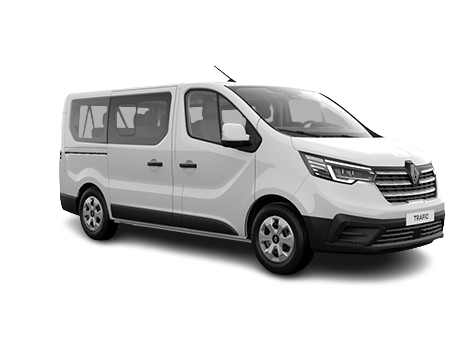
The representative vehicles
The vehicle handed over belongs to the category booked

In practice
Frequently asked questions
What exactly am I booking?
How is this different from renting from a private owner?
Does the weekend package apply?
Is there a security deposit?
Does the resident rate exist with professionals?
What do you pay online?
What is included
Across the whole fleet, without exception.
Filed by the owner or company, with the roadworthiness certificate, before publication.
5 % service fee, 15 % for the owner or company. The balance at handover.
For the booking, the handover and the return.
Renting from a professional in Senegal: what it changes
Renting from a professional in Senegal means accepting a trade-off: you do not choose the exact model, but you know as soon as you pay that the car will be there. It is the opposite of renting from a private owner, where you see the vehicle in photographs before committing, at the price of a call to the owner.
Neither is better than the other. They answer two different needs, and that is why we keep them separate from end to end — from the search right through to the handover of the keys.
Booking a category, not a car
This is the point to understand before all the rest. A professional rental company manages a fleet, not a vehicle. It commits to a class — a city car, a saloon, an SUV, a 4×4 — and guarantees that a vehicle of that class will be waiting for you on the agreed date. The precise model is decided at handover, according to what comes in and what goes out.
The vehicles we show on each category page are therefore representative examples, not promises. We write it rather than let anyone believe otherwise: that is the difference between a booking that holds and a disappointment on arrival.
In exchange, confirmation is immediate. No call, no waiting, no walk-around to approve. For a business trip or a late arrival, that certainty is often worth more than the choice of model.
The five categories, and what they cover
Category B is the city car: small footprint, low consumption, easy parking. It is the best stocked class in the professional fleet, and therefore the easiest to obtain on tight dates.
Category C, the saloon, is the right compromise for a stay that combines town and open road: comfortable enough for the toll motorway, compact enough to drive around, and a boot that takes four people's suitcases.
Categories D and E go up in ground clearance. The SUV gets through where a saloon scrapes — laterite tracks, camp accesses, roughly finished ramps — without imposing the consumption of an off-roader. The 4×4, for its part, is not a comfort but a condition of getting through: the soft sand of the Sine-Saloum, the Niokolo-Koba tracks, Casamance after the rains.
Category M is of another nature. It is a vehicle provided with a driver, operated by a licensed carrier: the driver and the fuel are included, and you do not drive. It has its own page.
What is included, and what is not
Mileage is unlimited across the whole fleet, without exception and without any catch-up clause. Category 8 insurance is filed by the rental company, as is the roadworthiness certificate: we only publish a vehicle once those documents have been received and are valid.
Fuel is at your expense: the vehicle is handed over to you at a recorded level and is returned at the same level. Tolls too, wherever the motorway is open.
The security deposit depends on the rental company. Some ask for one, others do not, and the amount varies from one professional to another for the same category — which is why we show no figure for it: it is given to you before the keys are handed over, never after.
How a rental is paid for
You pay 20 % online at the moment of booking. Those 20 % are made up of 5 % service fee, which comes to us, and 15 % passed on to the rental company. Nothing else is taken between the booking and the handover of the keys.
The balance is paid on site, directly to the professional, together with any extras it provides and the security deposit if it asks for one. It is the company that collects and the company that returns it: that sum never passes through us.
The resident rate exists with the professionals who offer one. It is optional and each company decides whether to grant it: verification is done once, on your account, and then applies automatically to the offers concerned.
Professional or private owner: how to choose
Take a professional if the date is fixed and certainty comes first: a business trip, a night arrival, a group that cannot wait. You will know straight away that the car is booked.
Take a private owner if you want to see the car before paying, if price counts for more than immediacy, or if you are going away for a weekend — the Friday-to-Sunday package exists only on that side.
The two routes never mix. A professional's vehicle does not appear among the private owners' listings, and the reverse is true too. The “who is renting out the vehicle” selector in the search is there for that.
What we require before publishing an offer
A vehicle does not appear because a rental company has entered it. It appears once two documents have been received and verified as valid: the Category 8 insurance certificate, which is the regime applicable to renting out vehicles without a driver, and the roadworthiness certificate. Both are stated on every published offer, and that is not a selling point: it is the condition for the offer to exist at all.
We name no rental company on the site, deliberately. A customer does not choose a brand, he chooses a category, a date and a price. Naming some would amount to ranking the others, and that is not for us to do: availability and price are enough to decide between them.
A professional rental company wishing to list its fleet goes through a dedicated form. Listing is free and non-exclusive: nothing stops a company from continuing to rent through its own channels.
Collecting and returning the vehicle
The handover takes place at the point agreed at booking. It begins with a joint condition report — a walk round the vehicle, photographs, fuel level — which serves as the reference on return. That is the moment when the balance, the extras and the security deposit, if there is one, are paid.
The return takes place at the same place, unless agreed otherwise beforehand. Returning the vehicle in another town is a one-way rental: it is agreed before booking, and any charges appear in the basket before payment, never after. A rental collected and returned at the same point bears none.
Allow some margin on your return time. A rental day begun is a rental day charged, and Senegalese late-afternoon traffic does not lend itself to tight calculations.
Where to rent, today and tomorrow
The professional fleet is concentrated for the time being in the capital region, which is also where demand is strongest: the 2023 census puts 22 % of the country's population there, and nearly half of all Senegalese live in the Dakar–Thiès–Diourbel triangle.
That coverage is not a limit of principle, it is a state of the fleet. It extends as rental companies list their vehicles, and our pages follow automatically: the areas offered in the search are those that actually have vehicles, not a list written in advance. When a category opens in a new town, it appears there without anyone having to rewrite anything.
If you are looking in an area not yet covered, tell us: that is what decides the order in which we open them. A request expressed is worth more than a desk estimate, and it is often a handful of repeated searches on the same town that triggers an approach to the rental companies already there. And when a town has no vehicle yet, the area offered in its place is the one with the nearest vehicles by actual distance, never the capital by default. Extending the fleet is not a fixed timetable: it is a response to what people are looking for.
Checked on 4 October 2026. To review in six months: the number of categories open, the areas covered, and each rental company's own conditions.