
CATEGORY SALOON
Renting a saloon in Senegal, from private owners
Two models, eighteen cars in the fleet. The saloon is the right compromise when you are travelling as a pair or as four with luggage, on the motorway as well as in town.
42 600 F / day · all in

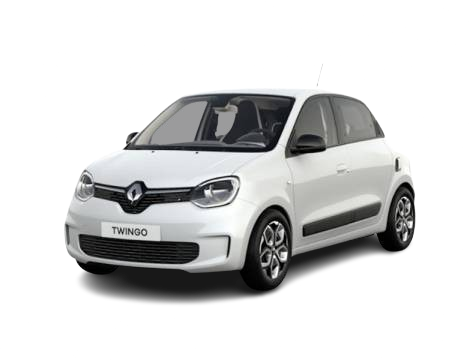
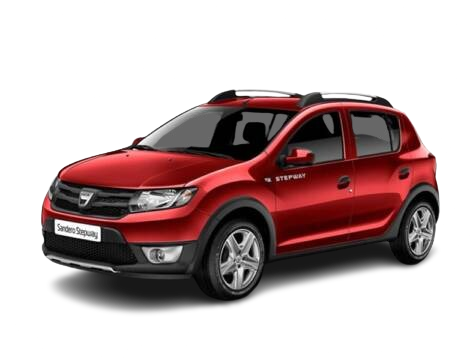
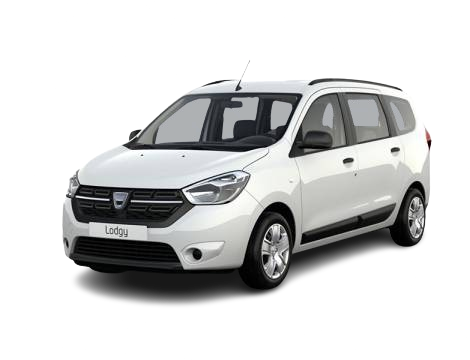
The saloons available
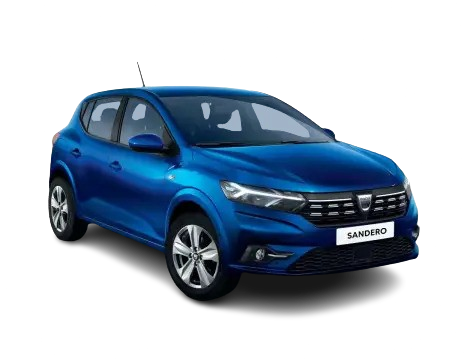
In practice
Why a saloon in Senegal
Between Dakar and the Petite Côte, the toll motorway is driven at a good pace and on tarmac: the saloon holds the road better there than a city car, for similar consumption. In town, its size stays reasonable for driving around the Plateau or the Almadies. It is the default choice for a stay that combines the capital and the coast.
What renting from a private owner changes
You are not booking a category but this particular vehicle, with its photos, its mileage and the neighbourhood where it is collected. We call the owner, he files a dated walk-around of his vehicle, and you decide afterwards. No payment is taken before you agree.
How far can you go
Mileage is unlimited across the whole fleet. For Saint-Louis or Casamance, tell the owner about the journey: on the tracks of Casamance, an SUV or a 4×4 will be better suited than a saloon.
The security deposit
It is optional and it is the owner who sets it: some ask for none at all. It never passes through us, is not part of the 20 % paid online, and is returned to you at the end of the rental. The amount is given to you before the handover.
Frequently asked questions
Is an international driving permit required?
What do I pay online, and what do I pay on site?
Is there a security deposit, and how much?
Can I drive to Saint-Louis or Casamance in a saloon?
Is mileage limited?
What is the weekend package?
The other categories
Still from private owners

The saloon in Senegal: what it allows, and what it does not
The saloon is the vehicle that covers the most of Senegal without asking anything particular of the driver. Compact enough for Dakar traffic, stable enough for the toll motorway, big enough in the boot for four people and their suitcases: it makes the capital-to-coast run without discussion, and a good deal more now that the toll network has been extended eastwards.
But it has a clear limit, and it is better known before booking: it stops where the tarmac stops. This is not a question of power, it is a question of ground clearance. This page says where it gets through, where it does not, in which season, and what a driving holiday really costs.
Senegal & the saloon
The Senegalese road network reads in two parts. On one side, a classified network of which only about a third is surfaced, according to the road agency's latest public inventory: the vast majority of the kilometres recorded are tracks. On the other, a toll corridor that has expanded considerably and that changes what a passenger car can do in the country.
The motorway starts from Dakar, crosses Diamniadio, serves Blaise-Diagne international airport — some forty kilometres from the capital — then continues towards Mbour and Thiès. An extension towards Thiadiaye opened in 2026. And above all, on 22 August 2026, the Mbour–Fatick–Kaolack section was inaugurated and opened to traffic: a hundred or so kilometres that bring the groundnut basin and the gateway to the Sine-Saloum within motorway reach. Another branch, the corridor towards Touba, completes the picture.
The consequence for anyone renting a saloon is direct. In two years, the share of the country comfortably reachable in a passenger car has widened appreciably. It is no longer only Dakar and the Petite Côte: it is Dakar, the Petite Côte, Thiès, Touba and now Kaolack, on dual carriageway.
The exception is the north. The Dakar–Tivaouane–Saint-Louis motorway, launched in 2023, was still under construction on 4 October 2026. In April 2026 the government called for work to be speeded up, and the deadlines announced by the various sources do not agree — somewhere between 2027 and 2028, unconfirmed. Until it opens, do not count on it: Saint-Louis is reached by the RN2, a surfaced two-lane national road of around 270 kilometres.
What it is worth day to day
In Dakar, size decides almost everything. The region concentrates 22 % of the country's population on less than three thousandths of its territory — a density of the order of 7,300 inhabitants per square kilometre, according to the 2023 census published by the national statistics agency. In practice that means arteries saturated at peak hours and contested parking. A saloon can still park there; beyond that, it is another matter.
On the motorway it holds the road better than a city car for comparable consumption, which counts over a stay of several weeks. Super petrol is at 990 francs a litre and diesel at 755 francs, in force since 12 September 2026: it is the energy sector regulatory commission that sets the scale, renewed every four weeks, and the price is the same throughout the country thanks to a transport equalisation built into the calculation. According to the government, these prices remain below the cost of importing the fuel, the State absorbing the difference — which makes the scale liable to change without a fixed timetable.
The fleet on the road in Senegal is old: academic work and transport ministry data converge on an average age of around fifteen years. A decree signed on 24 October 2025 did in fact raise the age limit on imports, taken to ten years for private cars. That is useful context to keep in mind: a recent, well-maintained vehicle is not the norm on the road, and driving reflects that.
Where it gets through, and where it does not
The national roads are surfaced and a saloon is at ease on them. The RN1 runs towards Kaolack, Tambacounda and the Malian border over more than seven hundred kilometres of tarmac. The RN6 crosses Upper Casamance and goes round The Gambia to the south as far as Ziguinchor; maintenance and rehabilitation works were under way there in 2026, notably towards Oussouye and Elinkine, which may force diversions.
The limit is therefore not on the national network. It is on the last kilometre, and that is where one has to be precise.
The Niokolo-Koba national park is travelled by interior laterite tracks, for which operators and guides agree in asking for an off-roader. Its own rules, for their part, impose no seasonal closure: what closes during the rainy season is the accommodation, not the park. The Bassari Country, towards Kédougou, is likewise reached by laterite tracks. In both cases a saloon is not suitable, and saying so in advance saves a wasted rental.
A word on the Lompoul desert, which many pages still offer as an excursion: it has been largely consumed by the mineral sands mining that occupies this stretch of coast, and the camp set up at the heart of the dunes closed in 2025. We therefore do not present it as a destination.
Between the two there is everything served by ordinary laterite track: Sine-Saloum camps, beach accesses, villages away from the main axis. These tracks deteriorate sharply during and after the rains — potholes, gullying, detours through the bush. Every year the regional press documents sections made all but impassable by the first rains. A saloon gets through there in the dry season, slowly; it has no business there in August.
When to rent
The dry season runs from October to June, the rainy season from June or July to October, more pronounced in the south and east of the country. The tourist high season lines up with the dry — November to April — and that is the period when the tracks are at their best and a saloon goes furthest.
For 2026, the national civil aviation and meteorology agency had announced a late season, setting in around ten days behind schedule, broadly below average, but with rains liable to continue into October and a risk of flooding at the end of the season. This is a seasonal forecast, not an outcome: if you rent in October, allow for some tracks still being marked.
In the heart of the dry season, the other phenomenon to know about is the harmattan, a dry dust-laden wind that blows mainly over the northern half. It does not hinder driving as such, but it cuts visibility and clogs everything: on those days you drive with the windows shut and clean the windscreen more often than elsewhere.
Good to know & budget
You drive on the right, as in France. Speed limits are as a general rule 50 km/h in built-up areas, 90 km/h outside them and 110 km/h on the motorway, but the signs take precedence: the text of the code is not publicly accessible online, and it is better to read the signs than to rely on an average.
Road safety deserves to be taken seriously. For 2025, the national road safety agency and the gendarmerie, which do not cover the same scope and whose counts cannot be added together, converge on an order of magnitude of 850 to 870 people killed on the country's roads. The Dakar region accounts for more than half of the accidents recorded by the agency, and nearly a third occur at night. Driving at night outside built-up areas is the black spot: poorly lit vehicles, carts, animals on the carriageway. The advice fits in one sentence — arrive before nightfall.
On budget, three items are added to the rental price. Fuel, at the administered prices quoted above. Tolls, of the order of thirty to fifty francs a kilometre in a light vehicle: in August 2026 the operating company announced a charge of 6,500 francs for Dakar–Kaolack and 3,000 francs for Mbour–Kaolack, and the run to the airport comes to around two thousand francs. These amounts are indicative and may be revised. Finally, the security deposit if there is one, which we come back to below.
With us, booking works like this: you pay 20 % online, made up of 5 % service fee and 15 % passed on to the owner, then the balance when the keys are handed over. Mileage is unlimited and Category 8 insurance is filed by the owner. The security deposit is optional: when an owner asks for one, it is he who sets the amount, collects it and returns it. It never passes through us. And from Friday 4 pm to Sunday 9 pm, the weekend package charges two days instead of three, with the owners who have adopted it.
Who is it for?
For the Dakar resident who heads down to the Petite Côte on a Friday evening and brings the car back on Sunday: the motorway is continuous to beyond Mbour, and the weekend package is made for that run.
For the traveller who lands at the airport and wants to reach the coast without depending on a transfer: the link is motorway from end to end.
For the business trip between Dakar, Thiès and now Kaolack, where the dual carriageway appreciably changes the day.
Not for a bush circuit, and not for the interior tracks of the Niokolo-Koba. In those cases you need an SUV or a proper off-roader, and it is as well to know it before booking as at the end of the track.
One last thing, which is not in the brochures. Senegal had a little over eighteen million inhabitants at the 2023 census, and nearly half live in the Dakar–Thiès–Diourbel triangle. That is where the traffic concentrates, and it is also where most of the fleet offered for rental is based. As soon as you leave it, driving is a great deal calmer — and the vehicles you pass have mostly lived a life.
Checked on 4 October 2026. Facts to review in six months: fuel prices, the opening of the Dakar–Saint-Louis motorway, toll charges, the outcome of the 2026 rainy season.