
CATEGORY CITY CAR
Renting a city car in Senegal, from private owners
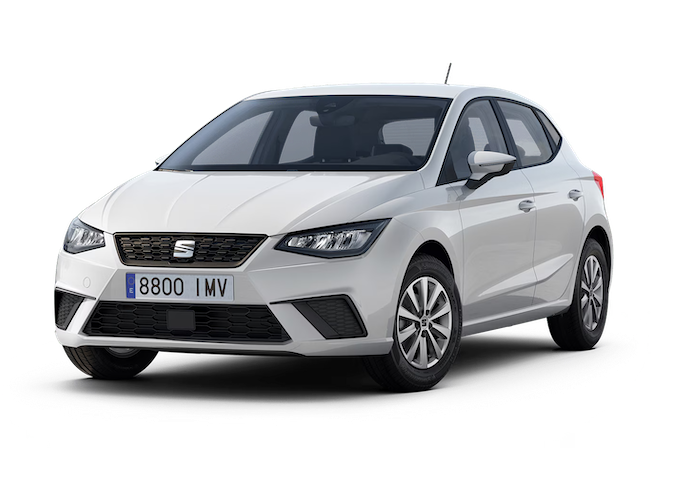
Two models, six cars in the fleet. The city car is the easiest vehicle to live with in a large Senegalese city: you slip through, you park, and fuel consumption stays low.
32 800 F / day · all in
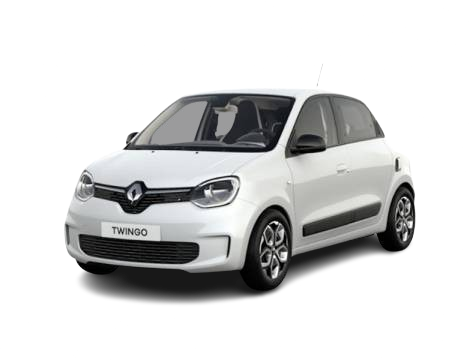
The city cars available
In practice
Why a city car in town
Dakar traffic is played out in centimetres: the Almadies at rush hour, the corniche, the narrow streets of the Plateau. A small footprint manoeuvres there without difficulty and parks where a saloon gives up. It is also the lightest fuel bill in the fleet, which counts over a stay of several weeks.
What renting from a private owner changes
You are not booking a category but this particular vehicle, with its photos, its mileage and the neighbourhood where it is collected. We call the owner, he files a dated walk-around of his vehicle, and you decide afterwards. No payment is taken before you agree.
Its limits
With four adults and suitcases, it is tight. For the Petite Côte with the family or for Saint-Louis, the saloon or the SUV are more comfortable. And off the tarmac, a city car is not the right choice: ground clearance does not forgive tracks.
The security deposit
It is optional and it is the owner who sets it: some ask for none at all. It never passes through us, is not part of the 20 % paid online, and is returned to you at the end of the rental. The amount is given to you before the handover.
Frequently asked questions
Is a city car enough to leave the city?
What do I pay online, and what do I pay on site?
Is there a security deposit, and how much?
Is mileage limited?
What is the weekend package?
Does the resident rate apply?
The other categories
Still from private owners
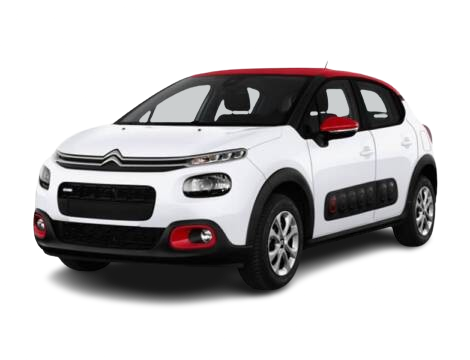
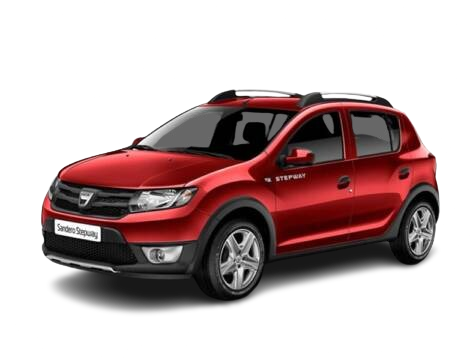
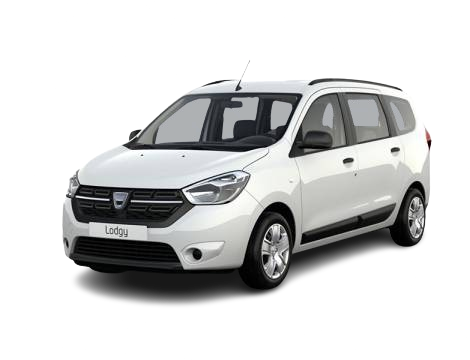
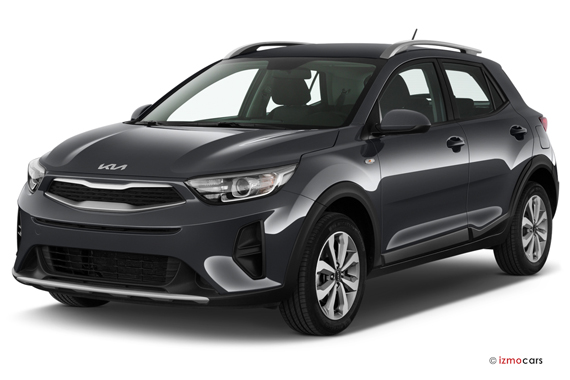
The city car in Senegal: what size really changes
In a large Senegalese city, the city car is not chosen for economy but for size. Its footprint decides everything: the space you take up in traffic, the space you find to park, and the time you lose doing it.
This page explains what that changes in practice, with official figures to back it up, and where the city car reaches its limit.
Senegal & the city car: one article of law, and a density
The Senegalese highway code contains a provision you do not find everywhere, and it says almost everything. Where the width or the condition of the carriageway does not allow vehicles to pass each other or overtake safely, the driver of a vehicle whose size or load exceeds 2.10 metres wide or 8 metres long must slow down and, if necessary, stop or pull over to let smaller vehicles through.
In other words: on a narrow road, the small vehicle has priority in practice. This is not a matter of courtesy, it is written into the regulation in force.
Density does the rest. According to the 2023 census, the Dakar region holds a little over 4 million inhabitants on 535 km² — 22 % of the country's population on less than three thousandths of its territory, that is nearly 7,500 inhabitants per square kilometre. And it is a peninsula: the transport authority explicitly lists the limited scope for extending the road network among the causes of congestion.
What a small footprint gains you
The study on transport externalities commissioned by the transport authority breaks down an average car journey in Dakar: 35.6 minutes, of which 20.3 driving outside congestion, 10.3 minutes of congestion and 5 minutes of access and parking. Five minutes of every journey therefore go on looking for somewhere to put the car.
The most telling measurement comes from the household travel survey: a journey takes on average 21 minutes by two-wheeler against 30 by car. Same origin, same destination, same traffic — the gap comes down to bulk. A city car does not do as well as a motorbike, but it comes closer to those 21 minutes than a large vehicle does.
To place the difficult hours, the transport authority's traffic model gives a congestion rate of 37 % between 7 and 8 am, 36 % between noon and 1 pm, and 40 % between 5 and 6 pm. The roads that the measurement campaigns identify as the busiest are the corniche road and avenue Cheikh Anta Diop.
Parking, the real subject
This is where size pays off most, and it is also the least documented point. The sustainable urban mobility plan, published in April 2023, states in black and white the lack of control, indeed of management, of parking — and goes no further than scheduling a feasibility study for a system covering the whole conurbation. There is therefore, to this day, no parking management scheme covering the city.
The urban master plan, for its part, described a city centre where 90 % of paid parking takes place on the street and half of all parking is irregular. That finding is dated — it covers 2004 — but no more recent measurement has been published since, and the public press was still describing scarce spaces and saturated car parks at the end of September 2026.
The administrative district adds a constraint of its own: around five square kilometres, virtually a dead end, served by four entrances only. A small vehicle does not remove the jam there; it does find a space where a large one does not.
Its limits, which are better known beforehand
The limit of a city car is not power, it is ground clearance. The national roads are surfaced and it is at ease on them; the laterite tracks that serve the camps, the sites and the villages away from the main axis deteriorate sharply during and after the rains. A city car gets through in the dry season, slowly, and has no business there in August.
The other limit is interior space. With four adults and suitcases it is tight; with five, you should be looking at the saloon or the SUV. The two models in this category do not, in fact, declare the same number of seats, and each one's page says so.
For a bush itinerary, the soft sand of the Sine-Saloum or a track in the east of the country, you need a vehicle from a higher category. Saying so in advance saves a wasted rental.
What is included, and what the rest costs
Mileage is unlimited across the whole fleet. Category 8 insurance is filed by the owner before publication, together with the roadworthiness certificate: a vehicle only appears once those documents have been received and are valid.
Fuel is at your expense. Under the scale in force since 12 September 2026, super petrol is at 990 francs a litre — an administered price, identical throughout the country thanks to a transport equalisation built into the calculation. This is where a city car stands out most clearly: less engine, less weight, fewer litres.
On payment: 20 % online at booking, that is 5 % service fee and 15 % passed on to the owner, then the balance when the keys are handed over. The security deposit is optional: when an owner asks for one, it is he who sets it, collects it and returns it, and it never passes through us. The amount is given to you before the handover.
When the car is not the right answer
We may as well write it, even though we rent out cars. In Dakar, seven journeys out of ten are made on foot and the private car accounts for less than four per cent of them, according to the latest household travel survey. Car ownership points the same way: about one household in seven had a car, that is twenty-six private vehicles per thousand inhabitants.
Two heavy transport modes have opened since. The bus rapid transit serves a corridor of 18.3 kilometres and twenty-three stations, with electric buses, from six in the morning to nine at night, for 400 to 500 francs a journey. The regional express train, in service since the end of 2021, saw its second phase open on 28 September 2026: it now links the capital to the international airport, fifty-five kilometres announced in around fifty-five minutes.
No published assessment measures their effect on car congestion to date: the figures in circulation are project forecasts, not observed results. But for a stay that plays out along the corridor they serve, the question is worth asking before renting by the day. A city car comes into its own once you leave those corridors — and that is the case for most stays.
For whom, and when
For a stay that plays out mostly in town, with short, repeated journeys. For anyone travelling alone or as a pair. For anyone who wants the lightest fuel bill in the fleet.
For a resident who heads down to the coast on a Friday evening, too: the weekend package, from Friday 4 pm to Sunday 9 pm charged as two days, exists on these vehicles with the owners who have adopted it.
A word on the calendar. The Youth Olympic Games are held in Senegal from 31 October to 13 November 2026, across Dakar, Diamniadio and Saly: an unusually busy period, in which a small vehicle will park more easily than a large one. And operations to clear the public highway were under way in the autumn of 2026 — local signage takes precedence.
Checked on 4 October 2026. To review in six months: BRT and TER ridership, the decongestion operations under way, and the possible publication of a new household travel survey — the last one dates from 2015.