
CATEGORY FAMILY CAR
Renting a family car in Senegal, from private owners
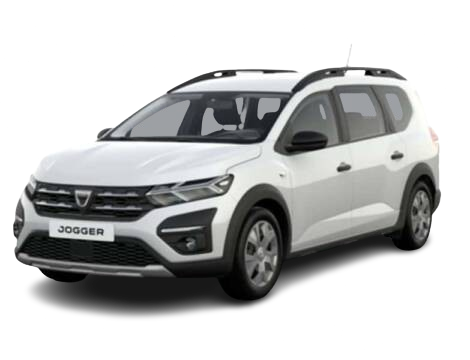
Two seven-seat models, offered directly by their owners. Enough to move a whole family with its luggage, without renting two cars.
59 000 F / day · all in
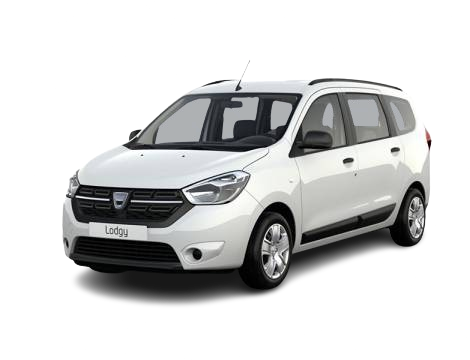
The family cars available
In practice
Seven seats, and luggage
From five people up, a saloon is no longer enough — and two rentals cost more than a single family car. The Dacia Lodgy and the Dacia Jogger offer seven seats; the third row folds away when you need boot space rather than seats.
For which journeys
It is the vehicle for group stays: Dakar–Saly on a Friday evening, a week in Saint-Louis, a round trip to Mbour with the children. On the toll motorway, comfort comes first; in town, the size calls for a little anticipation when parking.
What renting from a private owner changes
You are not booking a category but this particular vehicle, with its photos, its mileage and the neighbourhood where it is collected. We call the owner, he files a dated walk-around of his vehicle, and you decide afterwards.
And for a larger group
Beyond seven people you need a minibus — nine seats — and the one in the fleet is rented with a driver. That is another regime: the service includes the driver and the fuel, and you do not drive.
Frequently asked questions
How many people can be carried?
And beyond seven people?
What do I pay online, and what do I pay on site?
Is there a security deposit, and how much?
Is mileage limited?
What is the weekend package?
The other categories
Still from private owners

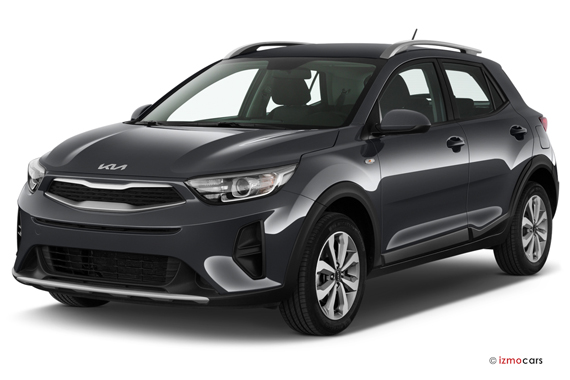
The family car in Senegal: seven seats, and the threshold that counts
In Senegal, the family car is not a stopgap vehicle. The 2023 census gives an average size of 8.6 people per household — 6.2 in the capital region, up to 11.8 in some southern regions. A family outing here quickly exceeds what a saloon can carry.
This page says what seven seats allow, where the regulatory limit lies that must not be crossed unknowingly, and what renting rather than taking public transport changes.
Senegal & the family car
The most telling figure is not the number of seats, it is the make-up of households. According to the 2023 general census, an ordinary household has on average 8.6 people, and six households in ten are extended households — grandparents, uncles, cousins living under the same roof. The gap between regions is considerable: 6.2 people on average in the Dakar region, against 11.8 in the Sédhiou region.
The age pyramid points the same way. 39.1 % of the population is under fifteen and the median age is 19. A family outing, here, is not a couple with two children: it is regularly six, seven or eight people, most of them young.
Hence a simple reality: in many cases the choice is not between a saloon and a family car, but between a family car and two rentals. The second option costs more and requires two drivers.
Seven seats, and the threshold not to cross
The two models in this category offer seven seats. The third row folds away when you need boot space rather than seats: with seven people and suitcases, you have to choose. That is the first thing to settle before booking.
The second is regulatory, and it is clear-cut. The text in force on licence categories defines the B licence as covering passenger vehicles with, besides the driver's seat, eight seats at most. In other words: nine seats in total, driver included. Beyond that you need a D licence, which requires being twenty-five and having held a B licence for at least a year.
The same text specifies that a seat means a seat intended for an adult, and that children under ten count as half a person, up to ten children. A large family with young children therefore often stays under the threshold.
One consequence people forget: going past nine seats also loses you speed. The regulation sets a lower limit for private passenger vehicles of ten to fourteen seats. Seven seats therefore means the comfort of a large vehicle without changing regime.
What renting changes compared with public transport
Senegalese intercity transport works on a per person fare and departs when full: you leave when the vehicle is full. The public operator posts, for example, 5,000 francs for Saint-Louis and 4,000 for Kaolack, per passenger. For a family of six, the bill is multiplied by six, out and back.
The state of the fleet also weighs on the decision. In February 2026 the transport ministry announced a general recall of intercity minibuses for a roadworthiness check, covering a fleet of about 6,900 vehicles whose average age is approaching twenty-four years, together with measures on luggage space layout. An open-ended operators' strike, in April 2026, also closed several bus stations. These are dated facts, not a judgement: they explain why a family travelling with children and luggage often prefers to control its own departure.
Renting is not always cheaper overall. It is, however, the only way to leave at the hour you choose, stop where you like and load what you like.
Seat belts and children: what the law actually says
We may as well write it plainly, because the information circulates badly. The regulation in force makes wearing a seat belt compulsory for the driver and the occupants of the front seats. As it stands, the obligation does not extend to rear seats. An exemption exists on medical certificate.
As for child seats, Senegal imposes no restraint system for children in private cars: no seat, no booster. The World Health Organization notes this explicitly in its country factsheet, and a full reading of the Senegalese texts confirms it — the only rule concerning children applies to two-wheelers, where a child under five must be placed in a seat fitted with straps.
That gap is not a recommendation. A suitable seat remains the best equipment for a child, and there is nothing to stop you bringing one or asking the owner whether he can provide one. We prefer to say so rather than let anyone believe in an obligation that does not exist — and rather than copying out another country's regulation, which many pages on the subject do.
One last calendar point: a new highway code act has been passed, but its regulatory part had not been published as of 4 October 2026. The rules above are those that apply today; they may change, and we will review them.
Luggage, and what the roof allows
Seven people and seven bags do not fit in a seven-seat vehicle with the third row up. The usual solutions are a roof rack or a roof box. The Senegalese highway code contains no rule specific to roof racks — neither express authorisation nor prohibition. It is therefore the general rules that apply.
They come down to three points. The overall height of a vehicle, load included, may not exceed four metres. The width of the load is capped at 2.50 metres, all projections included. And any overhanging load must be securely lashed down, without trailing on the ground or projecting more than three metres at the rear; nothing may project at the front.
In practice, on a roof rack, it is the lashing that counts, and checking it at every stop. Badly secured luggage is, moreover, explicitly targeted by the safety measures announced in 2026 for intercity transport.
Who it is for, and on which roads
For a family that heads down to the Petite Côte on a Friday evening and comes back on Sunday: the toll motorway is continuous from the capital, and the weekend package exists on these vehicles, with the owners who have adopted it: from Friday 4 pm to Sunday 9 pm, charged as two days instead of three.
For a week in Saint-Louis or a stay in the Sine-Saloum: since the Mbour–Fatick–Kaolack section opened in August 2026, the centre of the country is reached on dual carriageway as far as Kaolack. Beyond that, the national roads are surfaced; it is the last-kilometre tracks that call for something other than a family car.
Not for an off-tarmac circuit: a seven-seater has neither the ground clearance nor the driven wheels of an off-roader. And beyond eight passengers you have to move up to the minibus — which is rented with a driver, and falls under an entirely different regime.
A word to finish on the driving itself. The two institutions that count accidents in Senegal, the national road safety agency and the gendarmerie, converge on an order of magnitude of 850 to 870 people killed on the roads in 2025, with nearly a third of accidents occurring at night. With children on board, the advice fits in one sentence: leave early and arrive before nightfall.
Checked on 4 October 2026. To review in six months: the regulatory part of the new highway code, expected and not published; intercity transport fares; the 2026 road safety figures.