
CATEGORY SUV
Renting an SUV in Senegal, from private owners
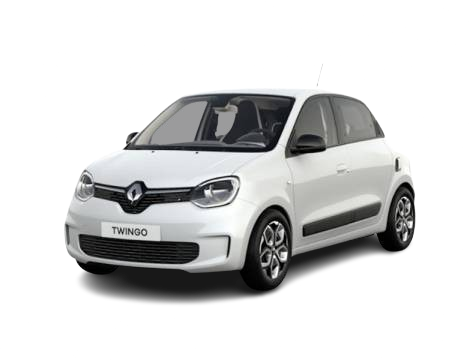
Four models, twelve cars in the fleet, two of them hybrids. Ground clearance and boot space make it the most versatile vehicle in the fleet.
26 200 F / day · all in
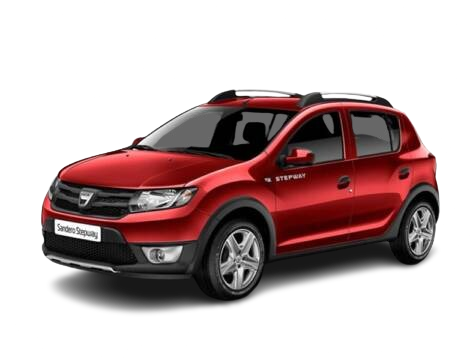
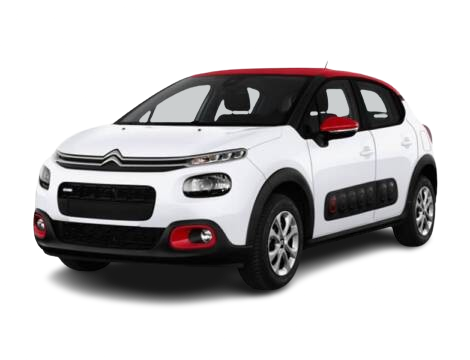
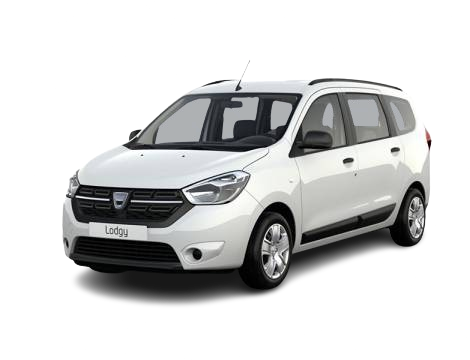
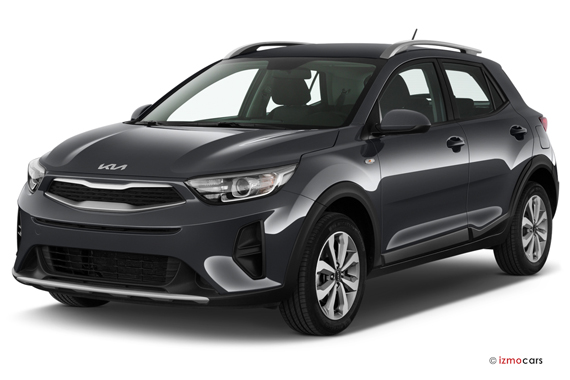
The SUVs available

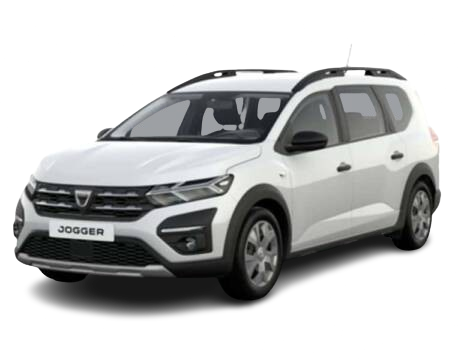
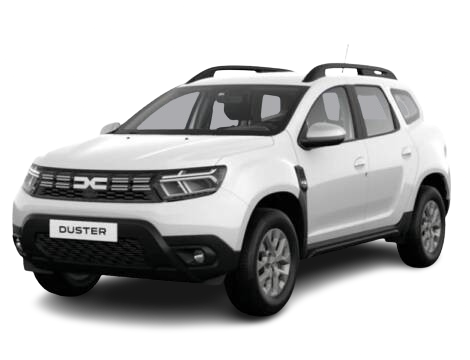
Dacia DUSTER EXPRESSION Hybride
In practice
Why an SUV in Senegal
Off the tarmac, ground clearance decides everything: a laterite track after the rainy season, a roughly finished car park ramp, the approach to a seaside camp. The SUV gets through where a saloon scrapes, without imposing the consumption or the bulk of a 4×4.
The two hybrids in the fleet
The Dacia Jogger Hybrid and the Dacia Duster Expression Hybrid are the two cheapest vehicles on this page, and the most frugal in the fleet in town. The hybrid works all the better the denser the traffic — which is to say, precisely in Dakar.
What renting from a private owner changes
You are not booking a category but this particular vehicle, with its photos, its mileage and the neighbourhood where it is collected. We call the owner, he files a dated walk-around of his vehicle, and you decide afterwards.
SUV or 4×4?
An SUV is not a 4×4: it has the ground clearance, rarely four-wheel drive. For soft sand, a crossing of the Sine-Saloum or a Niokolo-Koba track, you need a proper 4×4, and today that is rented from a professional.
Frequently asked questions
Is an SUV the same thing as a 4×4?
Do the hybrids hold up outside town?
What do I pay online, and what do I pay on site?
Is there a security deposit, and how much?
Is mileage limited?
What is the weekend package?
The other categories
Still from private owners
The SUV in Senegal: what ground clearance allows, and where it stops
The SUV is the most versatile vehicle in the fleet, and it is its ground clearance that makes it so — not its transmission. That distinction is no specialist's detail: it decides what you will be able to do and what you will not.
This page says where an SUV is enough, where it no longer is, and what the rainy season changes in the equation.
Senegal & the SUV
One official figure frames the subject better than any argument: of the 16,481 kilometres of classified road network, only 6,569 are surfaced — barely more than a third. The other 9,912 are earth, to which must be added some thirty thousand kilometres of unclassified roads, also earth. And according to the road agency's annual report, 51.7 % of the unsurfaced classified network is in poor condition, a proportion that has been worsening since 2022.
In other words: as soon as you leave the main corridors, you are driving on earth, and most often on earth in poor condition. That is where ground clearance stops being a catalogue argument and becomes the condition of getting through.
The best documented example is in Casamance. While the national road linking Sénoba to Ziguinchor and Mpack has been rebuilt, the feeder roads serving the tourist sites were described in December 2025 as “severely degraded” by a group of tourism operators, and in August 2026 by a regional outlet as “a succession of potholes turned into deep craters”. Maintenance works were launched at the end of 2025 on part of these roads — twenty-four kilometres treated, on roads tens of kilometres long: the road is not rebuilt for all that.
SUV or 4×4: the difference is written down somewhere
Contrary to what people think, “off-road” has an enforceable definition. The European type-approval regulation, the one that classifies vehicles sold in Europe and then resold here, requires four conditions together for the “off-road” symbol: both axles driven simultaneously, at least one differential lock or an equivalent mechanism, the ability to climb a 25 % gradient, and five geometric criteria out of six — approach angle, departure angle, ramp angle, ground clearances.
A road-going SUV fails that test, and the manufacturers' own figures show it unambiguously. A common hybrid SUV quotes around 187 millimetres of ground clearance and an approach angle of 19 degrees; a utility off-roader goes up to 205-215 millimetres and 31 degrees; a top-of-the-range off-roader reaches 291 millimetres and 38 degrees. The same gap on wading depth: from 530 to 900 millimetres within one manufacturer depending on the architecture.
Two public authorities write it in black and white, and it is the most solid fact in the file: SUV-type all-wheel drive is not four-wheel drive and bogs down more easily in soft sand. The Australian parks agency specifies that only vehicles with high ground clearance and low range can tackle sandy tracks; its American federal counterpart writes that two-wheel-drive and all-wheel-drive vehicles “get stuck more easily in loose sand”. That is not a magazine opinion, it is a land manager's instruction.
Where the SUV is enough, and that is a great deal
On dry laterite track, no public authority requires four-wheel drive. The British foreign office, for a country made up entirely of tracks, recommends not exceeding 80 km/h, carrying two spare wheels and water, and not driving at night — without prescribing a 4×4. The French ministry, for its part, recommends one as soon as you leave the tarmac.
In practice, an SUV covers: the degraded feeder roads of Casamance, the interior of the Saloum delta by laterite track, the approaches to the Bassari Country in the dry season, camp accesses and roughly finished ramps. It gets through where a saloon scrapes, without imposing the consumption or the bulk of an off-roader.
Good news for the rest: tarmac has made great progress. The Foundiougne ferry has gone since the bridge opened in January 2022, the Trans-Gambia one since 2019, and the motorway now runs beyond Mbour towards the centre of the country.
The two hybrids, and what can be said about them
Two of the four models in this category are hybrids, and they are the cheapest vehicles per day in the whole peer-to-peer fleet — cheaper than the most affordable city car. The hybrid gives its advantage in dense traffic, where the electric motor works hardest.
On tracks, the question deserves an honest answer. Hybridisation in itself imposes no off-road limit: a hybrid off-roader quotes 900 millimetres of wading depth, a plug-in hybrid 4×4 76 centimetres, with sealed high-voltage electronics. The limit is not the powertrain, it is the architecture of the vehicle.
A manufacturer's instruction does nevertheless exist and is worth knowing: on some hybrid systems, the manual forbids crossing a flooded area as soon as the water rises above the bottom of the wheel rims. And after an immersion, never attempt to restart: the electrical risk is real. We found, on the other hand, no documented limit on prolonged use of a hybrid on tracks — no overheating, no restriction, no recall. Absence of data is not proof of harmlessness: we prefer to put it that way.
What the rainy season changes
The technical literature describes precisely how an unsurfaced track comes apart under water: ruts from moisture in the lower layers, depressions that deepen “rapidly during the rainy season”, corrugations turning into potholes “following the first rains”, and gullies deepening “into veritable trenches impassable to motor traffic”. The bearing capacity of lateritic gravel falls sharply with water content.
The operating doctrine that follows is explicit: it is “imperative to limit traffic to the periods when the road surface is not too wet”, and repairs are carried out by gangs after each rainy season.
Two points of honesty. First, there are no official rainy-season dates: the meteorological agency publishes forecasts by zone, not a calendar. In 2025, the end of the season came in early October in the north and late October in the south. Second, no institutional source puts a figure on how long a track takes to dry out after the rains: be wary of pages announcing a fortnight or three weeks.
The north-south gradient explains all the rest: 269 millimetres of rain on average at Saint-Louis against 1,379 at Ziguinchor and 1,216 at Kédougou. A fivefold difference.
What is included, and who it is for
Mileage is unlimited. Category 8 insurance and the roadworthiness certificate are filed by the owner before publication. You pay 20 % online — 5 % service fee, 15 % passed on to the owner — then the balance at handover. The security deposit is optional, set by the owner, and never passes through us.
The SUV is for anyone mixing town and tracks: a stay combining the capital, the coast and a camp away from the main axis. For anyone who wants a safety margin on road conditions without renting an off-roader. And, with the hybrids, for anyone who wants the lightest fuel bill in the fleet.
It is not for soft sand, the tracks of eastern Senegal in the wet season, or the interior tracks of the Niokolo-Koba national park, for which operators and guides agree in asking for an off-roader in the absence of a written rule: there, you need a proper four-wheel drive, which is rented from a professional.
The weekend package, on the other hand, does exist on these vehicles with the owners who have adopted it.
Checked on 4 October 2026. To review in six months: the condition of the Casamance feeder roads, the works under way on the RN6, and the road agency's annual report.