
CATEGORY E
Renting a 4×4 from a professional in Senegal — category E
Four cars in the fleet. It is the category to take as soon as the itinerary leaves the tarmac for any length of time.
52 500 F / day · all in
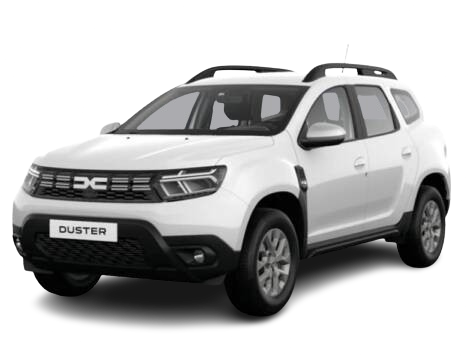
The vehicles in this category
In practice
What exactly you are booking
With a professional, the booking is for a category, not for a model. The vehicle shown above is its example: the one handed over to you will belong to that category. In return, availability is guaranteed as soon as you pay.
When the 4×4 becomes necessary
The soft sand of the Sine-Saloum, the Niokolo-Koba tracks, Casamance after the rains: these are terrains where a two-wheel-drive SUV bogs down. The 4×4 is not a comfort, it is a condition of getting through.
What is included
Unlimited mileage, Category 8 insurance. Fuel is returned at the gauge. A security deposit may be asked for depending on the rental company; its amount is given to you before the keys are handed over.
Tell us your itinerary
A bush journey is not driven like a run to Saly and back. Give your route when you book: the rental company adapts how the vehicle is prepared, and you will know what to expect in the event of a breakdown far from anywhere.
Frequently asked questions
What exactly am I booking?
When is a 4×4 really necessary?
Should I give my itinerary?
What do I pay online, and what do I pay on site?
Is there a security deposit?
Professional or private owner: what changes?
The other categories
Still from a professional
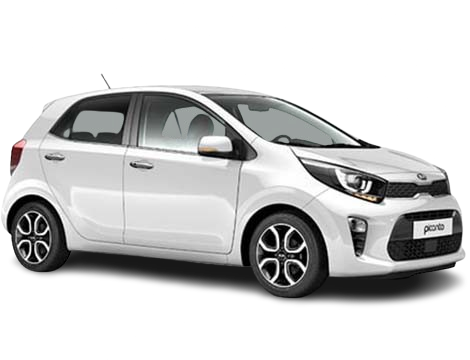
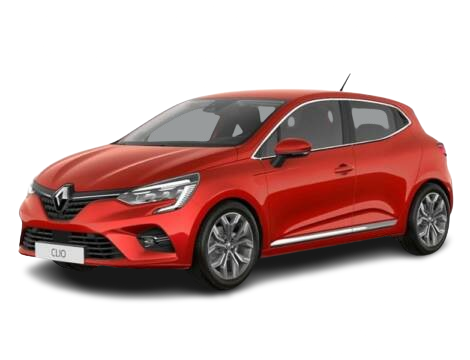

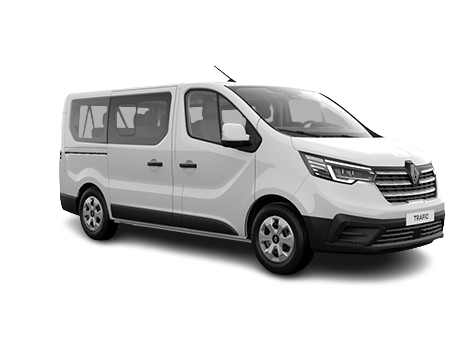
Category E in Senegal: when the 4×4 stops being a comfort
Category E is the four-wheel-drive category. It is not taken for comfort or for the driving position: it is taken when the itinerary leaves the tarmac for any length of time, and an SUV is no longer enough.
This page says what you are booking, where four-wheel drive becomes a condition of getting through, and how one drives on sand.
What exactly you are booking
With a professional, the booking is for a category, not for a model. The vehicles shown above are its representative examples: the one handed over to you will belong to that class, without necessarily being one of them. A rental company manages a fleet; it commits to a size, a number of seats and a set of capabilities, not to a registration number.
In exchange, you get confirmation as soon as you pay. No call, no waiting. We write it rather than let anyone believe otherwise: that is the difference between a booking that holds and a disappointment at the counter.
When the 4×4 really becomes necessary
Two public authorities write it in black and white: SUV-type all-wheel drive is not four-wheel drive and bogs down more easily in soft sand. The Australian parks agency specifies that only vehicles with high ground clearance and low range can tackle sandy tracks; its American federal counterpart writes that two-wheel-drive and all-wheel-drive vehicles “get stuck more easily in loose sand”.
One of those agencies in effect bans two-wheel drive beyond a marked zone, and warns that it does not provide recovery: private recovery there runs “from several hundred to several thousand dollars”. The logic is the same everywhere the sand is loose.
The other terrain that calls for four-wheel drive is waterlogged laterite. The technical literature is explicit on bearing capacity: that of lateritic gravel “falls sharply” with water content. And track operating doctrine recommends “limiting traffic to the periods when the road surface is not too wet”.
What “4×4” means technically
The word is overused, but it has an enforceable definition. To classify a vehicle as “off-road”, the European type-approval regulation requires four conditions together: both axles driven simultaneously, at least one differential lock or a mechanism of similar effect, the ability to climb a 25 % gradient, and five geometric criteria out of six — approach, departure and ramp angles, ground clearance under the axles and between them.
The gaps are considerable. A road-going SUV quotes around 187 millimetres of ground clearance and 19 degrees of approach; a utility off-roader 205 to 215 millimetres and 31 degrees; a top-of-the-range off-roader 291 millimetres and 38 degrees. On wading depth, from 530 to 900 millimetres within one manufacturer. These are not catalogue nuances: they are the centimetres that decide whether you get through.
The terrains concerned
The Niokolo-Koba national park, 913,000 hectares on the World Heritage list since 1981 and removed from the list of sites in danger in July 2024, is travelled by interior laterite tracks. Its own rules, dating from 1976, impose no seasonal closure: they require visitors to travel by motor vehicle, at 30 km/h maximum, forbid getting out other than at the designated stopping places and forbid driving from sunset to sunrise except on the national road. What closes during the rainy season is the accommodation, not the park. A vehicle permit may be required.
The Bassari Country, towards Kédougou, is reached by laterite tracks. It is the wettest region in the country — 1,216 millimetres of rain a year on average, against 269 at Saint-Louis — which mechanically explains why its tracks are the first to be cut.
The tracks of the inner Saloum delta and the approaches to villages away from the main roads fall into the same category once the rain has passed. The islands of the delta, on the other hand, are reached only by pirogue: no vehicle goes there.
One official warning is worth knowing: in Casamance, the French consular services advise against non-essential travel in the areas immediately bordering The Gambia and Guinea-Bissau, recommend using only the main roads, in daylight, and point out that mine clearance is not complete in the forests of those areas. A four-wheel drive changes nothing about that.
Driving on sand
Two public sets of instructions converge, and they are counter-intuitive. The first: deflate the tyres. Parks agencies cap pressure at around 1.4 bar on soft sand, and go down to 0.7 bar as a last resort when bogged down. The mechanism is simple — lowering the pressure increases the contact patch and therefore the grip.
The second: reduce speed without fail once deflated, and reinflate on the way out. Driving fast on deflated tyres destroys them.
Add to that what the consular services recommend for countries of tracks: two spare wheels, plenty of water, no driving at night. And tell the rental company your itinerary: it prepares the vehicle accordingly, and you will know what to expect far from anywhere.
When to rent
The dry season runs from October to June, the rainy season from June or July to October, more pronounced in the south and east. The tourist high season lines up with the dry, November to April.
Two points that count. First, there are no official rainy-season dates: the meteorological agency publishes forecasts by zone, not a calendar. In 2025, the end of the season came in early October in the north and late October in the south. Second, the north-south gradient is considerable: 269 millimetres of rain a year on average at Saint-Louis against 1,379 at Ziguinchor and 1,216 at Kédougou — a fivefold difference.
The technical literature describes precisely how a track comes apart under water: ruts, depressions that deepen “rapidly during the rainy season”, and gullies becoming “veritable trenches impassable to motor traffic”. Repairs are carried out after each rainy season. And no institutional source puts a figure on how long a track takes to dry out: be wary of pages announcing a fortnight or three weeks.
What is included, and who it is for
Mileage is unlimited across the whole fleet. Category 8 insurance is filed by the rental company before publication, together with the roadworthiness certificate.
Fuel is at your expense. Under the scale in force since 12 September 2026, super petrol is at 990 francs a litre and diesel at 755 — administered prices, identical throughout the country thanks to a transport equalisation built into the calculation. Tolls too, of the order of thirty to fifty francs a kilometre in a light vehicle.
You pay 20 % online at booking: 5 % service fee and 15 % passed on to the rental company. The balance is paid when the keys are handed over. The security deposit depends on the rental company; its amount varies from one professional to another for the same category, which is why we show no figure for it. It is given to you before the handover, never after, and never passes through us.
Take the professional if the date is fixed and certainty comes first. Take the private owner if you want to see the vehicle in photographs before paying, or if you are going away for a weekend: the package from Friday 4 pm to Sunday 9 pm, charged as two days, does not exist on the professional side.
The two routes never mix. They are not two aisles of the same catalogue but two regimes, with different insurance and different documents. The “who is renting out the vehicle” selector in the search is there for that.
Checked on 4 October 2026. To review in six months: the status of the Niokolo-Koba national park, the condition of the tracks in eastern Senegal, and the number of cars open to the category.