
CATEGORY C
Renting a saloon from a professional in Senegal — category C
Ten cars in the fleet. You book the category: the vehicle handed over will be a saloon from that class.
39 400 F / day · all in
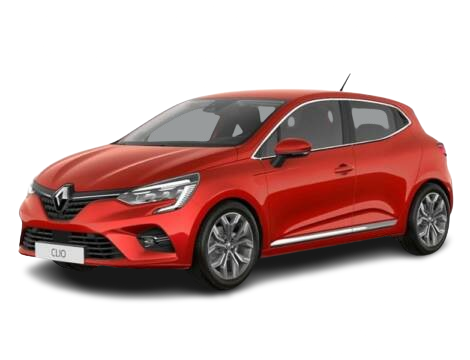
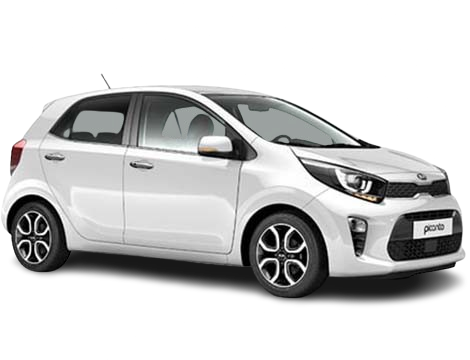
The vehicles in this category
In practice
What exactly you are booking
With a professional, the booking is for a category, not for a model. The vehicle shown above is its example: the one handed over to you will belong to that category, without necessarily being that one. In return, availability is guaranteed as soon as you pay.
Why category C
The saloon is the right compromise for a stay that combines Dakar and the Petite Côte: comfortable enough for the toll motorway, compact enough for town, and a boot that takes four people's suitcases.
What is included
Unlimited mileage, Category 8 insurance. Fuel is returned at the gauge. A security deposit may be asked for depending on the rental company; its amount is given to you before the keys are handed over.
Professional or private owner?
The professional confirms as soon as you pay but does not promise a specific model. The private owner promises that particular vehicle, with its photos, but requires a call to the owner. The two routes are kept separate from end to end.
Frequently asked questions
What exactly am I booking?
Why category C?
What do I pay online, and what do I pay on site?
Is there a security deposit?
Does the weekend package apply?
Professional or private owner: what changes?
The other categories
Still from a professional

Category C in Senegal: what you are booking, and how far it goes
Category C is the saloon category: the broadest compromise in the professional fleet, comfortable enough for the toll motorway and compact enough to drive around town. It is the class you take when the stay combines the capital and the open road.
But booking with a professional does not work like booking with a private owner, and it is better to know that before paying. This page says what you are committing to, what the category guarantees, and where it stops.
What exactly you are booking
With a professional, the booking is for a category, not for a model. The vehicle shown on this page is its representative example: the one handed over to you will belong to category C, without necessarily being that one. A rental company manages a fleet, not a vehicle, and it commits to a class — size, number of seats, boot — rather than to a registration number.
In exchange, you get what a private owner cannot give: confirmation as soon as you pay. No call, no waiting, no walk-around to approve. For a business trip with fixed appointments or a late arrival, that certainty is often worth more than the choice of model.
We write it rather than let anyone believe otherwise. That is the difference between a booking that holds and a disappointment at the counter.
Senegal & the saloon
The network has changed in two years, and that changes what a saloon allows. The motorway starts from the capital, crosses Diamniadio, serves Blaise-Diagne international airport — some forty kilometres — then continues towards Mbour and Thiès. And above all, on 22 August 2026, the Mbour–Fatick–Kaolack section was inaugurated and opened to traffic: a hundred or so kilometres that bring the groundnut basin and the gateway to the Sine-Saloum within motorway reach. Another branch serves Touba.
For anyone renting a saloon, the consequence is direct: the share of the country comfortably reachable has widened appreciably. It is no longer only the capital and the Petite Côte, it is also Thiès, Touba and now Kaolack, on dual carriageway.
The exception is the north. The motorway towards Saint-Louis, launched in 2023, was still under construction on 4 October 2026, and the announced deadlines do not agree — somewhere between 2027 and 2028, unconfirmed. Until it opens, Saint-Louis is reached by the national road, surfaced, over some 270 kilometres.
Where it gets through, and where it does not
The national roads are surfaced and a saloon is at ease on them: towards Kaolack, Tambacounda and the Malian border over more than seven hundred kilometres of tarmac, or towards Casamance going round The Gambia to the south.
The limit is therefore not on the national network but on the last kilometre. The laterite tracks that serve the camps, the sites and the villages away from the main axis deteriorate sharply during and after the rains — potholes, gullying, detours through the bush. A saloon gets through there in the dry season, slowly; it has no business there in August.
For an itinerary that leaves the tarmac for any length of time, it is category D or E you should be looking at: ground clearance decides, not power. Saying so in advance saves a wasted rental.
What is included, and what is not
Mileage is unlimited across the whole fleet, without exception and without any catch-up clause. Category 8 insurance is filed by the rental company before publication, together with the roadworthiness certificate: a vehicle only appears once those documents have been received and are valid.
Fuel is at your expense: the vehicle is handed over to you at a recorded level and is returned at the same level. At the rate in force since 12 September 2026, super petrol is at 990 francs a litre and diesel at 755 — administered prices, identical throughout the country thanks to a transport equalisation built into the scale. Tolls are also at your expense, of the order of thirty to fifty francs a kilometre in a light vehicle.
The security deposit depends on the rental company. Some ask for one, others do not, and the amount varies from one professional to another for the same category — which is precisely why we show no figure for it. It is given to you before the keys are handed over, never after, and it never passes through us.
On payment: 20 % online at booking, made up of 5 % service fee and 15 % passed on to the rental company, then the balance at handover. Nothing else is taken in between.
When to rent
The dry season runs from October to June, the rainy season from June or July to October, more pronounced in the south and east. The tourist high season lines up with the dry, November to April: that is the period when the tracks are at their best and a saloon goes furthest.
For 2026, the national meteorological agency had announced a late and broadly below-average season, with rains liable to continue into October. That was a seasonal forecast, not an outcome: if you rent at the end of the season, allow for some tracks still being marked.
In the heart of the dry season, the harmattan blows mainly over the northern half: a dry dust-laden wind that does not hinder driving as such, but cuts visibility and clogs everything.
The paperwork, and who takes the wheel
One condition often comes as a surprise, and it is better to know it before you pay: the licence must have been held for at least three years and must cover the vehicle's category. It applies to you and to any driver named on the contract.
The check takes place when the keys are handed over, on the original document, and it is the rental company that carries it out — not us. We collect neither identity document, nor passport, nor driving licence: none of that passes through the platform. A licence that is missing, expired or does not cover the category means the vehicle is not handed over, and it is the rental company that answers for it to its insurer.
On the licence itself, what matters is not so much the driver's nationality as the language the document is written in. A licence in French is read as it is. Written in English, German, Arabic or Dutch, it is better accompanied by an international driving permit — which is not a second licence but an official translation of your own. It is not a legal requirement for a short stay, but it saves a pointless discussion at a checkpoint. On exactly how long a foreign licence is tolerated the sources do not agree, and we will not settle it for you; beyond one year of residence, on the other hand, exchanging it for a Senegalese licence becomes compulsory.
If two of you will be driving, say so beforehand. Authorised drivers are named on the contract and driving by a person who is not named is prohibited — this is not a formality, it is the insurance that lapses. The additional driver is an option from the rental company: it is the company that prices it and collects it, on site, and it appears in the summary before payment.
Professional or private owner?
Take category C if the date is fixed and certainty comes first. You will know straight away that the car is booked, and you will have nobody to call.
Take a saloon from a private owner if you want to see the vehicle in photographs before paying, if price counts for more than immediacy, or if you are going away for a weekend: the package from Friday 4 pm to Sunday 9 pm, charged as two days, does not exist on the professional side.
The two routes never mix. A professional's vehicle does not appear among the private owners' listings, and the reverse is true too: they are not two aisles of the same catalogue, but two regimes, with different insurance and different documents. The “who is renting out the vehicle” selector in the search is there for that.
One last marker, valid for both: the two institutions that count accidents in Senegal converge on an order of magnitude of 850 to 870 people killed on the roads in 2025, and nearly a third of accidents occur at night. Arrive before nightfall.
Checked on 4 October 2026. To review in six months: the opening of the Dakar–Saint-Louis motorway, fuel prices, toll charges, and the number of vehicles open to the category.