
CATEGORY D
Renting an SUV from a professional in Senegal — category D
Two cars in the fleet today. You book the category: the vehicle handed over will be an SUV from that class.
59 000 F / day · all in
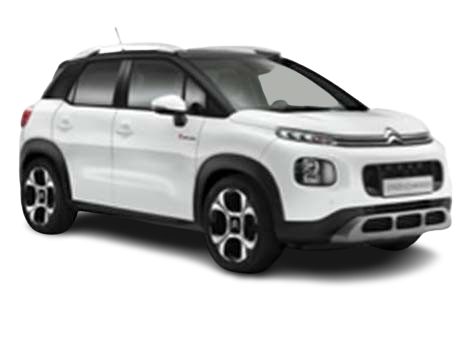
The vehicles in this category
In practice
What exactly you are booking
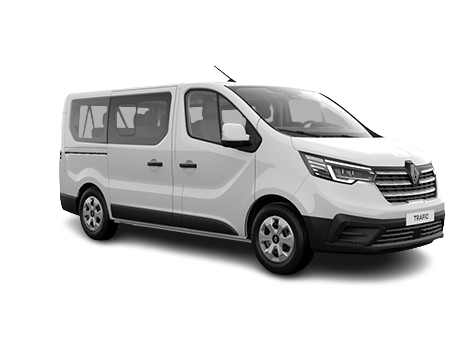
With a professional, the booking is for a category, not for a model. The vehicle shown above is its example: the one handed over to you will belong to that category. In return, availability is guaranteed as soon as you pay.
Why category D
The ground clearance of an SUV changes everything as soon as you leave the tarmac: laterite tracks, camp accesses, roughly finished ramps. Without imposing the consumption or the bulk of a proper 4×4.
A category with low stock
This category has only two cars to date. On fixed dates, book early — or look at category E, which offers more off-tarmac capability.
What is included
Unlimited mileage, Category 8 insurance. Fuel is returned at the gauge. A security deposit may be asked for depending on the rental company; its amount is given to you before the keys are handed over.
Frequently asked questions
What exactly am I booking?
Why category D?
Is this category easy to obtain?
What do I pay online, and what do I pay on site?
Is there a security deposit?
Professional or private owner: what changes?
The other categories
Still from a professional
Category D in Senegal: ground clearance, and what it does not do
Category D is the SUV category: the ground clearance of an off-roader without its consumption or its bulk. It is the class to take as soon as the itinerary leaves the surfaced road without actually sinking into sand.
This page says what you are booking, what ground clearance really allows, and why it is no substitute for four-wheel drive.
What exactly you are booking
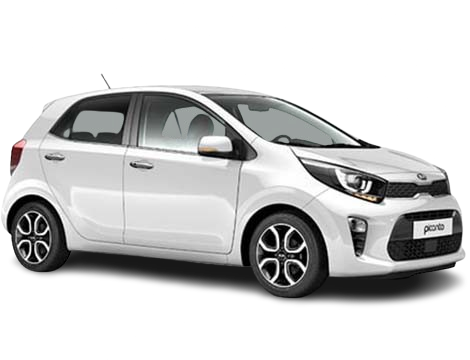
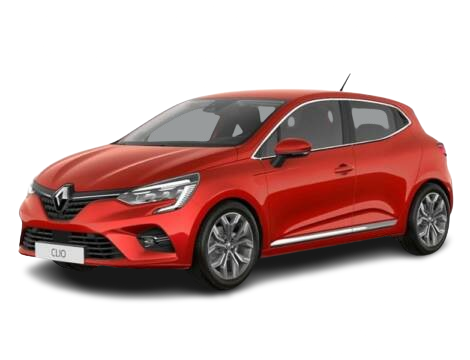
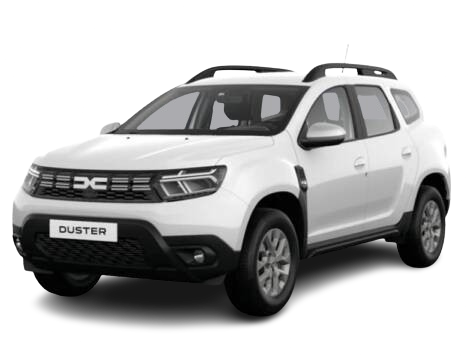
With a professional, the booking is for a category, not for a model. The vehicles shown above are its representative examples: the one handed over to you will belong to that class, without necessarily being one of them. A rental company manages a fleet; it commits to a size, a number of seats and a set of capabilities, not to a registration number.
In exchange, you get confirmation as soon as you pay. No call, no waiting. We write it rather than let anyone believe otherwise: that is the difference between a booking that holds and a disappointment at the counter.
Why ground clearance decides
One official figure frames the subject: of the 16,481 kilometres of classified road network, only 6,569 are surfaced. The other 9,912 are earth, to which must be added some thirty thousand unclassified kilometres. And 51.7 % of the unsurfaced classified network is in poor condition according to the road agency's annual report, a proportion that has been worsening since 2022.
As soon as you leave the main corridors you are therefore driving on earth, and most often on earth in poor condition. The best documented example is in Casamance: while the national road linking Sénoba to Ziguinchor and Mpack has been rebuilt, the feeder roads serving the sites were described in August 2026 as “a succession of potholes turned into deep craters”. Maintenance works launched at the end of 2025 cover twenty-four kilometres, on roads tens of kilometres long: the road is not rebuilt for all that.
That is exactly the territory of an SUV: it gets through where a saloon scrapes, without imposing the consumption of an off-roader.
What ground clearance does not do
“Off-road” has an enforceable definition. For the “off-road” symbol, the European type-approval regulation requires both axles driven simultaneously, at least one differential lock or an equivalent mechanism, the ability to climb a 25 % gradient, and five geometric criteria out of six.
A road-going SUV fails that test, and the manufacturers' figures show it: around 187 millimetres of ground clearance and a 19-degree approach angle, against 205 to 215 millimetres and 31 degrees for a utility off-roader. On wading depth, the gap runs from 530 to 900 millimetres depending on the architecture.
Two public authorities write it in black and white: SUV-type all-wheel drive is not four-wheel drive and bogs down more easily in soft sand. The Australian parks agency specifies that only vehicles with high ground clearance and low range can tackle sandy tracks; its American federal counterpart writes that two-wheel-drive and all-wheel-drive vehicles “get stuck more easily in loose sand”.
One point of honesty to finish. On dry laterite track, no public authority requires four-wheel drive: the British foreign office, for a country made up entirely of tracks, recommends not exceeding 80 km/h, carrying two spare wheels and water, and not driving at night — without prescribing an off-roader. The French ministry, for its part, recommends one as soon as you leave the tarmac. Category D therefore covers a wide share of off-tarmac itineraries, and it is soft sand and waterlogged laterite that mark its limit.
A category with few cars
We may as well say it plainly: this category has few cars to date. On fixed dates, book early — or look at category E, which offers more off-tarmac capability, and whose numbers are also limited.
The professional fleet is concentrated for the time being in the capital region, which is also where demand is strongest. That coverage is not a limit of principle but a state of the fleet: the areas offered in the search are those where vehicles are actually available, and a new town appears there by itself as soon as a rental company lists vehicles there.
When to rent
The dry season runs from October to June, the rainy season from June or July to October, more pronounced in the south and east. The tourist high season lines up with the dry, November to April.
Two points that count. First, there are no official rainy-season dates: the meteorological agency publishes forecasts by zone, not a calendar. In 2025, the end of the season came in early October in the north and late October in the south. Second, the north-south gradient is considerable: 269 millimetres of rain a year on average at Saint-Louis against 1,379 at Ziguinchor and 1,216 at Kédougou — a fivefold difference.
The technical literature describes precisely how a track comes apart under water: ruts, depressions that deepen “rapidly during the rainy season”, and gullies becoming “veritable trenches impassable to motor traffic”. Repairs are carried out after each rainy season. And no institutional source puts a figure on how long a track takes to dry out: be wary of pages announcing a fortnight or three weeks.
What is included, and what the rest costs
Mileage is unlimited across the whole fleet. Category 8 insurance is filed by the rental company before publication, together with the roadworthiness certificate.
Fuel is at your expense. Under the scale in force since 12 September 2026, super petrol is at 990 francs a litre and diesel at 755 — administered prices, identical throughout the country thanks to a transport equalisation built into the calculation. Tolls too, of the order of thirty to fifty francs a kilometre in a light vehicle.
You pay 20 % online at booking: 5 % service fee and 15 % passed on to the rental company. The balance is paid when the keys are handed over. The security deposit depends on the rental company; its amount varies from one professional to another for the same category, which is why we show no figure for it. It is given to you before the handover, never after, and never passes through us.
Professional or private owner?
Take the professional if the date is fixed and certainty comes first. Take the private owner if you want to see the vehicle in photographs before paying, or if you are going away for a weekend: the package from Friday 4 pm to Sunday 9 pm, charged as two days, does not exist on the professional side.
The two routes never mix. They are not two aisles of the same catalogue but two regimes, with different insurance and different documents. The “who is renting out the vehicle” selector in the search is there for that.
One last marker, valid for every category. The two institutions that count accidents in Senegal converge on an order of magnitude of 850 to 870 people killed on the roads in 2025, and nearly a third of accidents occur at night. The Belgian consular services explicitly advise against driving after nightfall, because of the state of the network and of the vehicle fleet. Arrive before dark.
A word on coverage, finally. The areas offered in the search are those where vehicles are actually available: it is not a list written in advance, it is calculated from the fleet. A new town appears there by itself as soon as a rental company lists vehicles there, and elsewhere delivery remains possible on request. If you are looking in an area not yet covered, tell us: that is what decides the order in which we open them.
Checked on 4 October 2026. To review in six months: the condition of the Casamance feeder roads, the road agency's annual report, and the number of cars open to the category.