
CATEGORY B
Renting a city car from a professional in Senegal — category B
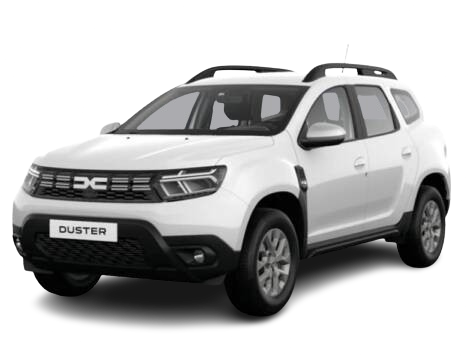
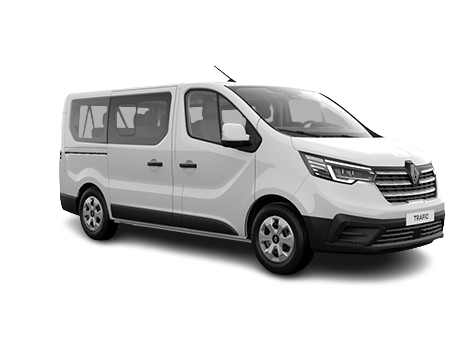
Two representative models, twenty-nine cars in the fleet. You book the category: the vehicle handed over may be either one, or another equivalent model.
32 800 F / day · all in
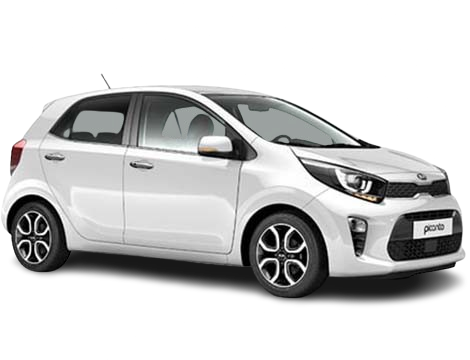
The vehicles in this category
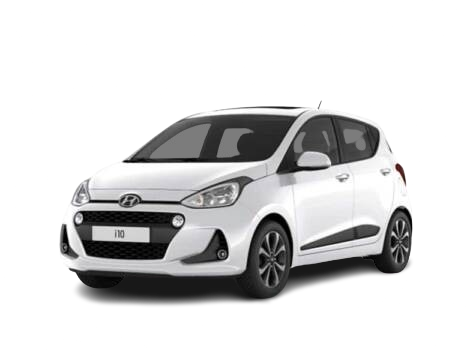
In practice
What exactly you are booking
With a professional, the booking is for a category, not for a model. The vehicles shown above are its examples: the one handed over to you will belong to that category, without necessarily being one of them. In return, availability is guaranteed as soon as you pay.
Why category B
It is the city car: small footprint, low consumption, easy parking. In Dakar it is the category with the most cars in the professional fleet — and therefore the one most easily found on tight dates.
What is included
Unlimited mileage, Category 8 insurance. Fuel is returned at the gauge. A security deposit may be asked for depending on the rental company; its amount is given to you before the keys are handed over.
Professional or private owner?
The professional confirms as soon as you pay but does not promise a specific model. The private owner promises that particular vehicle, with its photos, but requires a call to the owner before confirmation. The two routes are kept separate from end to end.
Frequently asked questions
What exactly am I booking?
Why category B?
What do I pay online, and what do I pay on site?
Is there a security deposit?
Is mileage limited?
Professional or private owner: what changes?
The other categories
Still from a professional
Category B in Senegal: the city car, and why size counts
Category B is the city car category: the smallest footprint in the professional fleet, and the best stocked class — and therefore the easiest to obtain on tight dates.
This page says what exactly you are booking, why size weighs so heavily in a large Senegalese city, and where this category reaches its limit.
What exactly you are booking
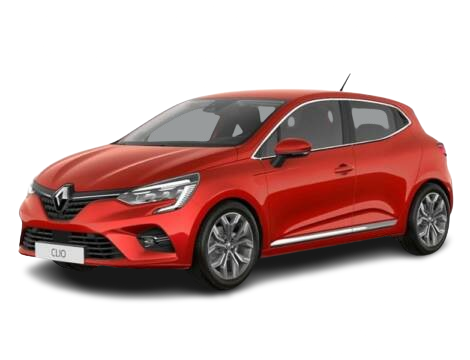
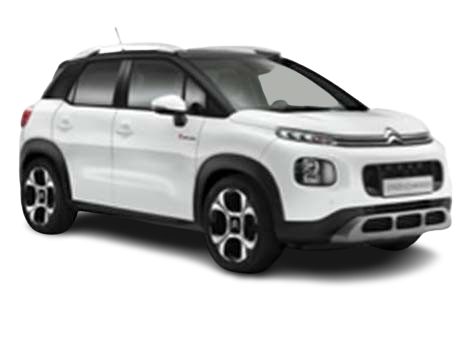
With a professional, the booking is for a category, not for a model. The vehicles shown above are its representative examples: the one handed over to you will belong to that class, without necessarily being one of them. A rental company manages a fleet; it commits to a size, a number of seats and a set of capabilities, not to a registration number.
In exchange, you get confirmation as soon as you pay. No call, no waiting. We write it rather than let anyone believe otherwise: that is the difference between a booking that holds and a disappointment at the counter.
Why size counts here
The Senegalese highway code contains a provision that says almost everything. Where the width or the condition of the carriageway does not allow vehicles to pass each other or overtake safely, the driver of a vehicle exceeding 2.10 metres wide or 8 metres long must slow down and, if necessary, stop or pull over to let smaller vehicles through. On a narrow road, the small vehicle therefore has priority in practice.
Density does the rest. The 2023 census puts a little over four million inhabitants in the capital region, on 535 square kilometres: 22 % of the country's population on less than three thousandths of its territory. And it is a peninsula — the transport authority explicitly lists the limited scope for extending the network among the causes of congestion.
Translated into minutes: an average car journey takes 35.6 minutes, of which 10.3 of congestion and 5 minutes of access and parking, according to the study commissioned by that authority. Five minutes of every journey go on looking for somewhere to put the car, and that is where a small footprint pays.
Parking, the real subject
The sustainable urban mobility plan, published in April 2023, notes the lack of control, indeed of management, of parking and goes no further than scheduling a feasibility study for a system covering the whole conurbation. There is therefore no scheme covering the city to this day.
The urban master plan described a city centre where 90 % of paid parking takes place on the street and half of all parking is irregular. The finding is dated — it covers 2004 — but nothing more recent has been published, and the public press was still describing scarce spaces and saturated car parks at the end of September 2026.
A traffic plan is also in force along the bus rapid transit corridor, with one-way systems and daytime restrictions for heavy goods vehicles. Local signage takes precedence.
A note on the fleet. The one in the capital region numbered 421,377 vehicles, two thirds of them private cars, and that region holds 70 to 73 % of the national fleet. It is old: an average of around twenty years for private cars, and a decree signed on 24 October 2025 raised the age limit on imports from eight to ten years. A professional rental company renews its fleet faster than a private owner does: that is a real argument for this route, and it does not show up in a photograph.
Where it gets through, and where it does not
One official figure frames the subject: of the 16,481 kilometres of classified road network, only 6,569 are surfaced. The other 9,912 are earth, to which must be added some thirty thousand unclassified kilometres. And 51.7 % of the unsurfaced classified network is in poor condition according to the road agency's annual report, a proportion that has been worsening since 2022.
The limit of a city car is not power but ground clearance. The national roads are surfaced and it is at ease on them; the laterite tracks that serve camps and villages deteriorate sharply during and after the rains. For an itinerary that leaves the tarmac for any length of time, look at category D or E.
When the car is not the right answer
We may as well write it, even though we rent out cars. In the capital, seven journeys out of ten are made on foot and the private car accounts for less than four per cent of them, according to the latest household travel survey. About one household in seven had a car.
Two heavy transport modes have opened since. The bus rapid transit serves a corridor of 18.3 kilometres and twenty-three stations, with electric buses, for 400 to 500 francs a journey. The regional express train saw its second phase open on 28 September 2026: it now links the capital to the international airport, fifty-five kilometres announced in around fifty-five minutes.
No published assessment measures their effect on car congestion to date: the figures in circulation are project forecasts, not observed results. But for a stay that plays out along the corridor they serve, the question is worth asking before renting by the day.
What is included, and what the rest costs
Mileage is unlimited across the whole fleet. Category 8 insurance is filed by the rental company before publication, together with the roadworthiness certificate.
Fuel is at your expense. Under the scale in force since 12 September 2026, super petrol is at 990 francs a litre and diesel at 755 — administered prices, identical throughout the country thanks to a transport equalisation built into the calculation. Tolls too, of the order of thirty to fifty francs a kilometre in a light vehicle.
You pay 20 % online at booking: 5 % service fee and 15 % passed on to the rental company. The balance is paid when the keys are handed over. The security deposit depends on the rental company; its amount varies from one professional to another for the same category, which is why we show no figure for it. It is given to you before the handover, never after, and never passes through us.
Professional or private owner?
Take the professional if the date is fixed and certainty comes first. Take the private owner if you want to see the vehicle in photographs before paying, or if you are going away for a weekend: the package from Friday 4 pm to Sunday 9 pm, charged as two days, does not exist on the professional side.
The two routes never mix. They are not two aisles of the same catalogue but two regimes, with different insurance and different documents. The “who is renting out the vehicle” selector in the search is there for that.
One last marker, valid for every category. The two institutions that count accidents in Senegal converge on an order of magnitude of 850 to 870 people killed on the roads in 2025, and nearly a third of accidents occur at night. The Belgian consular services explicitly advise against driving after nightfall, because of the state of the network and of the vehicle fleet. Arrive before dark.
A word on coverage, finally. The areas offered in the search are those where vehicles are actually available: it is not a list written in advance, it is calculated from the fleet. A new town appears there by itself as soon as a rental company lists vehicles there, and elsewhere delivery remains possible on request. If you are looking in an area not yet covered, tell us: that is what decides the order in which we open them.
Checked on 4 October 2026. To review in six months: ridership on the capital's heavy transport modes, the decongestion operations, and the number of vehicles open to the category.