
Renting a vehicle from private owners in Senegal
Vehicles offered directly by their owners. You see the vehicle in pictures before you pay, you pay 20 % online and the balance when the keys are handed over.
The categories





All vehicles
Offered directly by their owners





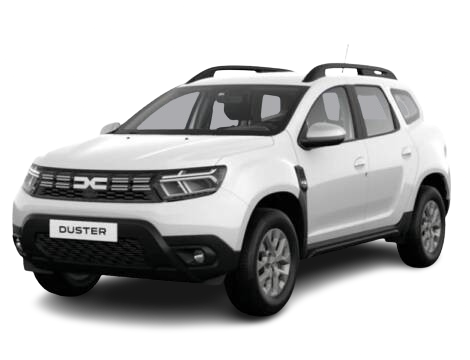
Dacia DUSTER EXPRESSION Hybride
In practice
Frequently asked questions
Is it really cheaper than a rental company?
Who is responsible if there is a problem?
Is the vehicle insured for rental?
What do I pay when booking?
Can I cancel?
Where do I collect the vehicle?
What is included
Across the whole fleet, without exception.
Every published vehicle is insured by its owner.
5 % service fee, 15 % for the owner or company. The balance at handover.
For the booking, the handover and the return.
How it works, in three sentences
- 1
An owner lists their car
They set their price, dates and conditions. They upload their papers and their category 8 insurance certificate, whose validity we check before the vehicle appears on the site.
- 2
You book online
You pay 20% of the total when booking. The balance is paid when the keys are handed over, directly to the owner.
- 3
The hand-over is done in person
Driving licence, ID, filmed walk-around. The condition report is drawn up by both sides — it protects both parties.
What changes compared with an agency
Both models exist on this site, and we don't claim one replaces the other. An agency has a uniform fleet, a counter and opening hours. A private owner has one car, a price they set themselves, and a flexibility an agency doesn't have. The right choice depends on what you are looking for.
Peer to peer
What you gain
- Prices set by owners, not by a rate card
- Vehicles and hand-over places that agencies don't cover
- A single contact, reachable on WhatsApp
- The resident rate, if you live in Senegal and the owner offers one
No middleman between you and the owner
Each vehicle is listed with its owner or the company operating it. Nobody steps in to take a cut — so no commission is stacked on another. The price you see starts from the rate they set.
What you need to know
The trade-offs
- No counter or agency hours: the hand-over is arranged
- One vehicle, not an interchangeable category
- The exact hand-over place is set with the owner
- Leaving the country must be requested in advance, it cannot be improvised
What we ask for before a vehicle appears
The owner's file
Registration document, current insurance certificate, roadworthiness test less than twelve months old — and the holder's ID if the name on the registration differs from the one on the insurance. An incomplete file does not go through, and the vehicle is not put online.
The vehicle's insurance
A vehicle rented to a third party must be covered for that use. That is what category 8 allows, and it is the document whose validity we check most carefully.
The filmed condition report
At departure and on return, on both sides. The video is dated: it settles disagreements over scratches before they start.
A single, traceable channel
The whole conversation goes through a single WhatsApp number linked to the booking file. A change of number on an account does not go through without us — it is our safeguard against fraud.
What we are, and what we are not
We do not own the vehicles and we do not rent them out: we put people in touch, we check the administrative documents, and we support the booking. The rental contract binds the renter and the owner.
The price you see starts from the owner's rate, and our share is already in it. No service fee added at the end, no surprise supplement at checkout. The 20% paid online is part of that total, not an extra charge.
Do you have a car sitting idle?
An idle vehicle costs money: insurance, depreciation, battery. Rented out a few days a month, it earns money. Listing is free, you keep control of your dates and your price, and you have no commission to pay us after the rental — it is collected online at booking, and you receive the balance on the spot.
Further reading
Renting out your vehicle
Understand
Listed owners, a filmed hand-over
20% when you book · balance at handover · a single WhatsApp number
Renting from private owners in Senegal: what it changes, and what it asks of you
Renting a private owner's car is not the same operation as renting a company's. You are not booking a category: you are booking that particular vehicle, the one whose photographs you see, with its mileage and the neighbourhood where it is collected.
That is paid for in patience — there are two exchanges before you pay anything — and it is gained in price and in certainty about what you will be handed. This page explains both sides of the market, without promising what we cannot deliver.
What you are booking: that particular vehicle
Every listing covers one identified car. The photographs are of that car, not of a catalogue model. Nobody can replace it with another without your agreement — that is the fundamental difference from the professional route, where you book a class of vehicle and the model handed over is decided at handover.
That precision has a price: an owner does not manage a fleet. He cannot guarantee you a replacement if his car is off the road, and that is precisely why we check availability with him before asking you to pay.
In return, you know what you will get. The number of seats, the doors, the gearbox, the fuel and the mileage are on the page; mileage is unlimited across the whole fleet, without exception and without any catch-up clause.
Why this market exists here more than elsewhere: the car is scarce and expensive to run. In the capital region, about one household in seven has a car, and the private car accounts for less than four per cent of journeys according to the latest household travel survey. A vehicle standing idle nevertheless keeps costing — insurance, depreciation, battery. Rented out a few days a month, it earns instead of sleeping, and it is that calculation that feeds the fleet you see on this page. The downside is known and we say it: this fleet is old — an average of around twenty years for private cars in the region — and that is one more reason to look at the photographs before paying.
The two exchanges, and why they exist
Between your request and your payment, two things happen. We call the owner to confirm his vehicle is free on your dates — nobody but he can commit it, and an automatic calendar promising otherwise would be wrong. Then he files a dated walk-around of his vehicle, less than seven days old.
You decide afterwards, and only afterwards. No sum is due before you agree, and nothing is held on your payment method during those exchanges.
This means a last-minute rental is not this route's strong point: allow for the time of our call, then of his answer. If your date is fixed and you cannot wait, the professional route confirms as soon as you pay — that is exactly what it exists for, and the two never mix.
What we check, and what we do not claim to do
A vehicle does not appear because an owner has entered it. It appears once three documents have been received and verified as valid: the Category 8 insurance certificate, the roadworthiness certificate less than twelve months old, and the registration document in the owner's name, with the tax disc up to date.
Let us also say what we do not do. We carry out no mechanical inspection and we never claim that a vehicle is “checked” or “certified”. We state what has been filed, and we date it. The difference between those two wordings is not legal caution: it is the difference between information we can prove and a promise we could not keep.
Category 8 deserves a word, because it rules out most cars. It is the line of the CIMA schedule that covers renting out; almost every private car is insured in category 1, which does not cover making the vehicle available to a third party. An owner who wants to rent out must therefore change policy — and it is that change, not a declaration on his honour, that opens access to this fleet.
The weekend package, which exists only on this side
From Friday 4 pm to Sunday 9 pm, the rental is charged as two days instead of three. It is the only structural price advantage on the site, and it belongs to vehicles from private owners: it does not exist on the professional side.
Two honest points. It applies only with the owners who have adopted it — it is not a site rule, it is an option each one decides to open. And it is read on the offer: we do not calculate it for you on a presentation page.
The resident rate follows the same logic: it exists with the owners who offer one, verification is done just once on your account, and it then applies by itself to the offers concerned, with no code to enter. Being a resident does not depend on your telephone dialling code but on where you live.
Who answers for what
The rental contract binds the renter and the owner. We are party neither to the handover, nor to the condition report, nor to any dispute — we are the intermediary that brought the two together and that keeps the record.
That record counts for more than it seems. We hold the file, the history of the exchanges, the dated walk-around of the vehicle and the condition report drawn up on both sides at handover. In the great majority of disagreements — a disputed scratch, a fuel level, a return time — those documents are enough to settle it without anyone having to arbitrate.
The security deposit follows the same principle. It is optional: many owners ask for none, the practice not being customary in Senegalese peer-to-peer renting. When there is one, it is the owner who sets the amount, collects it and returns it. It never passes through us, it is not part of the 20 % paid online, and its amount is given to you before the keys are handed over — never after.
What you pay, and when
At booking, 20 % of the total amount online, by card, Wave or Orange Money. Those 20 % are made up of 5 % service fee, which comes to us, and 15 % passed on to the owner. The balance is paid when the keys are handed over, directly to him, together with any extras he provides and the security deposit if he asks for one. Nothing else is taken in between.
The price shown is a total price: nothing is added at the next step. What remains at your expense outside the rental is fuel — the vehicle is returned at the level recorded at the start — along with tolls, parking and any fines.
A last word on coverage. The areas offered in the search are those where vehicles are actually available: it is not a list written in advance, it is calculated from the fleet, and a new town appears there by itself as soon as an owner lists a vehicle there. Elsewhere, a handover can be negotiated directly with him. If you are looking in an area not yet covered, tell us: a request expressed is worth more than a desk estimate, and it is what decides the order in which we open towns.
Checked on 5 October 2026. To review in six months: the number of vehicles and areas covered, the cancellation terms if the conditions change, and the share of owners who have adopted the weekend package.