
CATEGORY AUTOMATIC
Renting an automatic car in Senegal, from private owners
One model today, five cars in the fleet. The automatic gearbox changes life above all in the capital's traffic jams.
26 200 F / day · all in
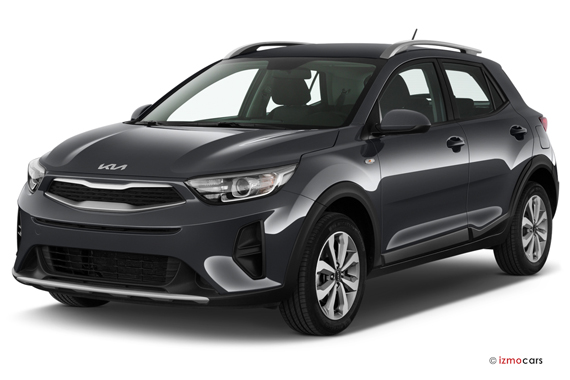
The automatics available
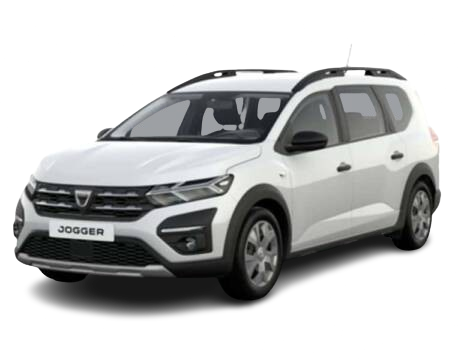
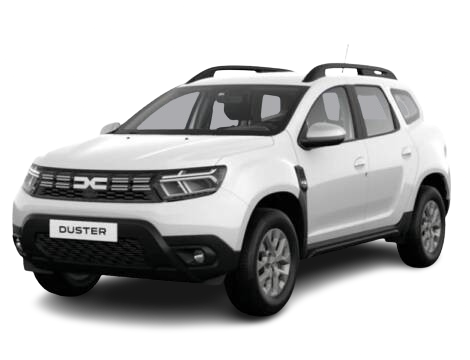
Dacia DUSTER EXPRESSION Hybride
In practice
Why an automatic gearbox in Dakar
The jams on the corniche and avenue Cheikh Anta Diop — the two roads that official measurements identify as the busiest in the capital — are worked on the clutch. An automatic gearbox removes that movement, repeated hundreds of times a journey. For anyone who drives an automatic day to day, taking back a manual in unfamiliar traffic is not the moment to relearn.
What is available
The peer-to-peer fleet has a single automatic model, in five cars. That is few: if your dates are fixed, book early. The professionals' fleet offers others, with immediate confirmation.
What renting from a private owner changes
You are not booking a category but this particular vehicle, with its photos, its mileage and the neighbourhood where it is collected. We call the owner, he files a dated walk-around of his vehicle, and you decide afterwards.
The security deposit
It is optional and it is the owner who sets it: some ask for none at all. It never passes through us and is returned to you at the end of the rental.
Frequently asked questions
How many automatic vehicles are there?
Why an automatic gearbox in Senegal?
What do I pay online, and what do I pay on site?
Is there a security deposit, and how much?
Is mileage limited?
What is the weekend package?
The other categories
Still from private owners
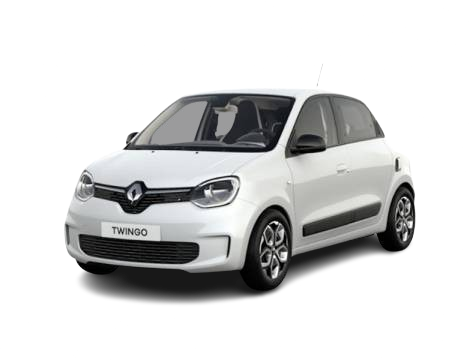
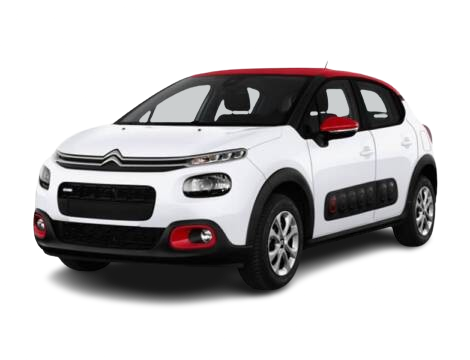
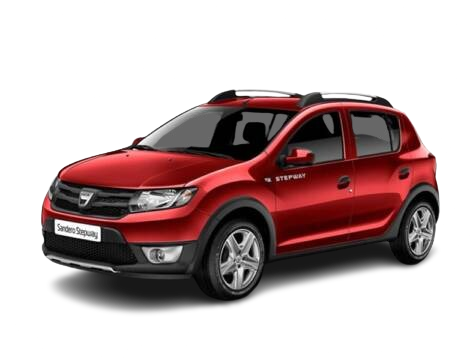
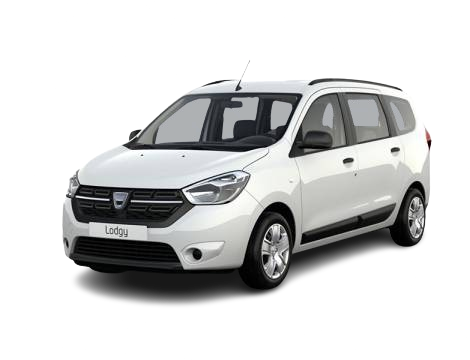
The automatic gearbox in Senegal: what is known, and what is not
The automatic gearbox is not a luxury in Senegal: it is an answer to a type of traffic. In the big cities, the clutch is worked hundreds of times a journey, and it is precisely that movement the automatic removes.
This page says what the official figures allow us to state, and it owns up to what no source allows us to say.
Why an automatic here
The argument is not comfort, it is measurement. The traffic model of the Dakar transport authority gives a congestion rate of 37 % between 7 and 8 am, 36 % between noon and 1 pm, and 40 % between 5 and 6 pm. The weekday daily average rose from 27 % to 34 % between 2019 and 2021.
Translated into a journey, that gives: 10.3 minutes of congestion in an average car journey of 35.6 minutes, according to the study on transport externalities commissioned by that same authority. Ten minutes of stopping and starting, per journey, every day.
That is exactly the territory of an automatic gearbox. And it is also a safety argument: in traffic you do not know, with two-wheelers, carts and pedestrians pushed onto the carriageway, one hand less occupied by the lever is one more unit of attention for the road.
What the Senegalese licence says — and does not say
One point deserves to be written clearly, because the information in circulation comes from elsewhere. The Senegalese driving licence carries no “automatic gearbox” endorsement. The regulation in force defines categories A1, A, B, C, C1, D, E and F, with no restriction linked to transmission.
The “code 78” rule, which restricts a licence obtained on an automatic to automatic vehicles only, is a French and Belgian provision. It has no equivalent in Senegal. The reduced training hours you sometimes read about — thirteen hours on an automatic against twenty on a manual — come from that same foreign law.
In practice: a holder of a B licence can drive either one here, with no particular formality. And for a tourist stay, the French consular services state that a French national licence is enough for the whole length of the visit; beyond the French case, check with your own consulate.
How many are there? Nobody knows
We may as well say it plainly rather than invent a percentage: no public statistics break the Senegalese vehicle fleet down by transmission type. Neither the national statistics agency, nor customs, nor the international bodies that publish on used vehicles in Africa produce that figure. The existing inventories classify by vehicle category and by fuel, never by gearbox.
What can be said, on the other hand, is documented. The fleet registered in the Dakar region numbered 421,377 vehicles, two thirds of them private cars, and the capital holds 70 to 73 % of the national fleet. That fleet is old: an average of around twenty years for private cars. A decree signed on 24 October 2025 raised the age limit on imports from eight to ten years for passenger cars.
On our own fleet, the answer is simple and verifiable on screen: the automatic vehicles offered by private owners can be counted on the fingers of one hand. If your dates are fixed, book early. The professionals' fleet offers others, with confirmation as soon as you pay.
Two automatics out of three are hybrids
This is a feature of this category, and it changes the arithmetic. The hybrid vehicles in the fleet are automatic by construction, and they are also the cheapest per day in the whole peer-to-peer fleet — cheaper than the most affordable city car.
The hybrid gives its advantage where the electric motor works hardest: in dense traffic, with constant stopping and starting. In other words, exactly in the 10 minutes of daily congestion measured above. On an open road, the consumption gap with a conventional model narrows.
These vehicles keep the ground clearance of their petrol version: they are neither more nor less suited to tracks. The limit stays the same as for the rest of the fleet — the tarmac stops, the track begins, and you need a suitable vehicle.
What is included, and what the rest costs
Mileage is unlimited. Category 8 insurance and the roadworthiness certificate are filed by the owner before publication.
Fuel is at your expense, at the scale in force since 12 September 2026: 990 francs a litre of super petrol, 755 francs for diesel, identical throughout the country. One received idea deserves qualifying: modern automatic gearboxes no longer systematically use more fuel than manuals, and in dense urban traffic the gap can go the other way.
On payment: 20 % online — 5 % service fee, 15 % passed on to the owner — then the balance when the keys are handed over. The security deposit is optional and set by the owner; it never passes through us and is given to you before the handover.
What the automatic gearbox does not solve
It removes a movement, not a jam. The causes of congestion put forward by the transport authority are structural: growth of the vehicle fleet, the low capacity of a road network whose scope for extension is limited by the geography of the peninsula, insufficient regulation, occupation of public space.
The fleet, precisely, is growing by about eight per cent a year — a doubling of the number of motor vehicles in ten years, according to the planning documents. An automatic gearbox makes the ten minutes of daily congestion more bearable; it does not shorten them.
One surprising fact, worth knowing: on particulate emissions from Dakar road traffic, dust thrown back into the air as vehicles pass accounts for the bulk — far more than the exhaust itself, according to the study commissioned by the transport authority. Driving more slowly and less often therefore counts as much as engine technology.
Who it is for
For anyone who drives an automatic day to day and does not want to relearn the manual in unfamiliar traffic. That is the most frequent reason, and the most legitimate.
For a mainly urban stay, where the gain is measured in movements avoided rather than in kilometres.
For anyone looking for the lightest fuel bill: the two hybrids in this category are the cheapest vehicles per day in the peer-to-peer fleet.
Less suited to a long motorway run without traffic, where the advantage fades, and not at all to an off-tarmac itinerary, which belongs to another category.
One last practical marker, which does not depend on the gearbox. The two institutions that count accidents in Senegal — the national road safety agency and the gendarmerie — converge on an order of magnitude of 850 to 870 people killed on the roads in 2025, and the capital region accounts for more than half of the recorded accidents. Nearly a third occur at night, on roads used by poorly lit vehicles, carts and animals. Automatic or manual, the advice is the same: arrive before nightfall.
And if your stay plays out along the corridor served by the heavy transport modes — the bus rapid transit corridor or the express train line, now extended to the airport — the question of whether you need a car every day is worth asking before the question of the gearbox.
Checked on 4 October 2026. No public statistics exist on the share of automatic vehicles in Senegal — to be rechecked if any body publishes one.